Museo Storico Aeronautica Militare Italiana - MUSAM
Vigna di Valle, Italy 2023


Photos © Ruud Leeuw


Museo Storico Aeronautica Militare (MUSAM), Vigna di Valle 2023
museo storico aeronautica militare, Vigna di Valle 2023

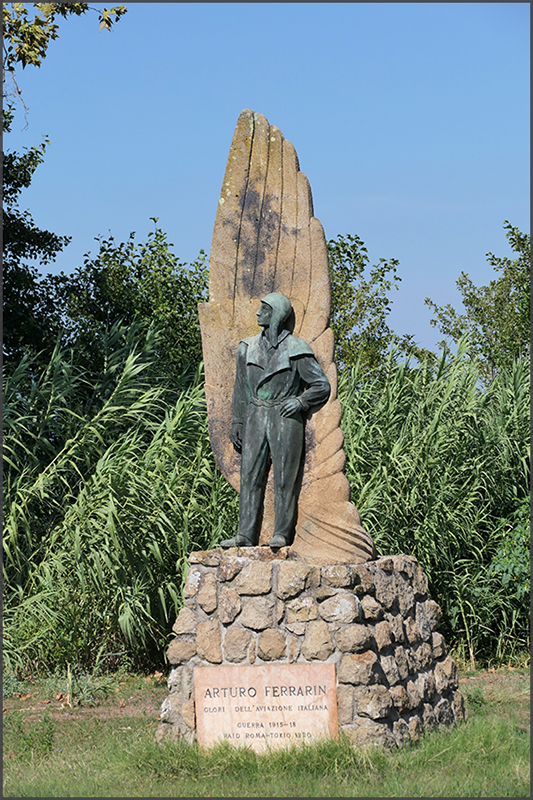
Arturo Ferrarin (b.13Feb1895 – d.18Jul1941) was an Italian pioneer aviator. His exploits included winning the 'Rome-Tokyo Raid' air race in 1920 and a non-stop flight from Italy to Brazil in 1928, with fellow aviator Carlo Del Prete.
The latter flight set the world distance record for a non-stop flight. Ferrarin, who was born in Thiene and was a decorated veteran of the Italian Royal Air Force during World War I.
He died in a plane crash at Guidonia Montecelio in 1941. [¬Wikipedia]


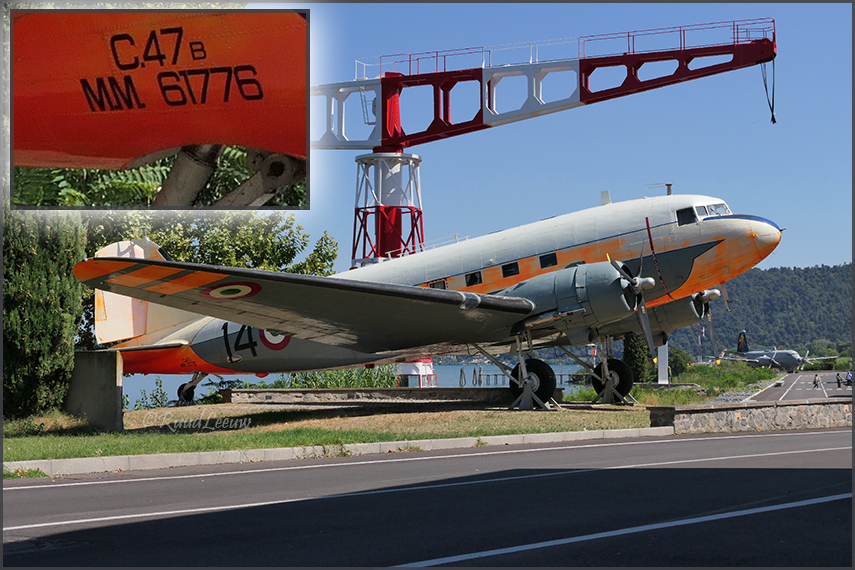
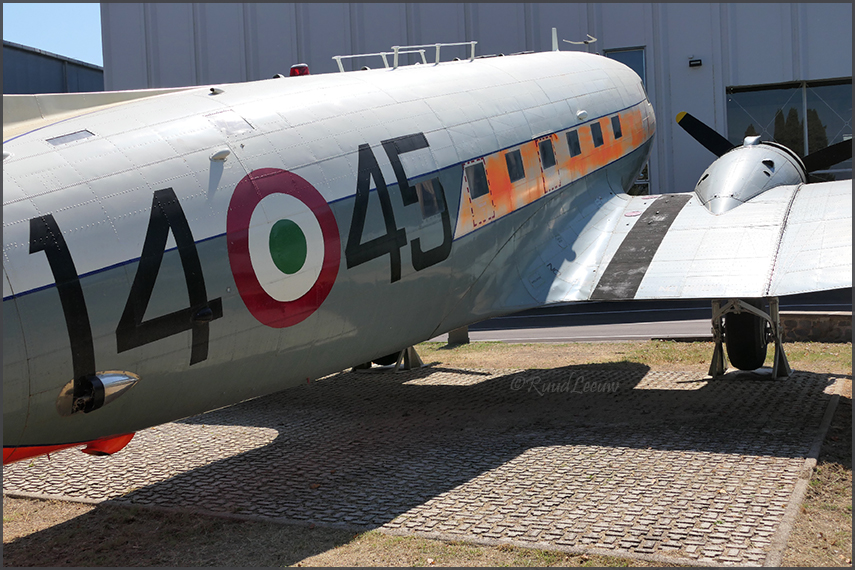
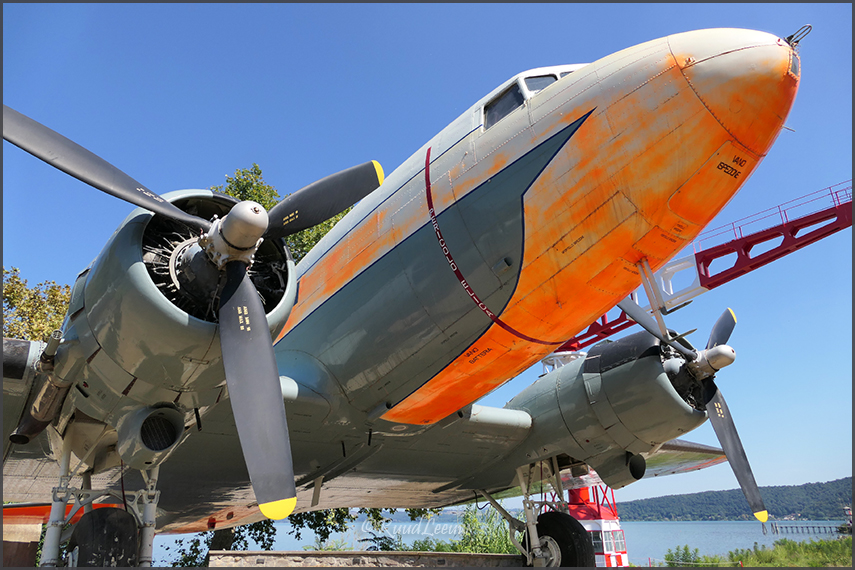
Museo Storico Aeronautica Militare (MUSAM), Vigna di Valle 2023Douglas C-47B, mm61776 | 14-45 (c/n 19194): off on a good start!

Museo Storico Aeronautica Militare (MUSAM), Vigna di Valle 2023
Delivered to USAAF 01dec1943 as 42-100731; KLM operated 1946-1950 as PH-TBH; bought by Italian
Air Force 09may1950 mm61776 14-45; at dump Guidona 1986, since 1993 under restoration by Museo Storico
in Vigna di Valle. Last noted Vigna Di Valle Airport Museum (LIRB) 26Oct03, fully restored.

Museo Storico Aeronautica Militare (MUSAM), Vigna di Valle 2023
14-45, 14° Stormo Radiomisure

Museo Storico Aeronautica Militare (MUSAM), Vigna di Valle 2023

Museo Storico Aeronautica Militare (MUSAM), Vigna di Valle 2023
Always nice to find a former KLM airliner preserved somewhere!

Museo Storico Aeronautica Militare (MUSAM), Vigna di Valle 2023

Museo Storico Aeronautica Militare (MUSAM), Vigna di Valle 2023
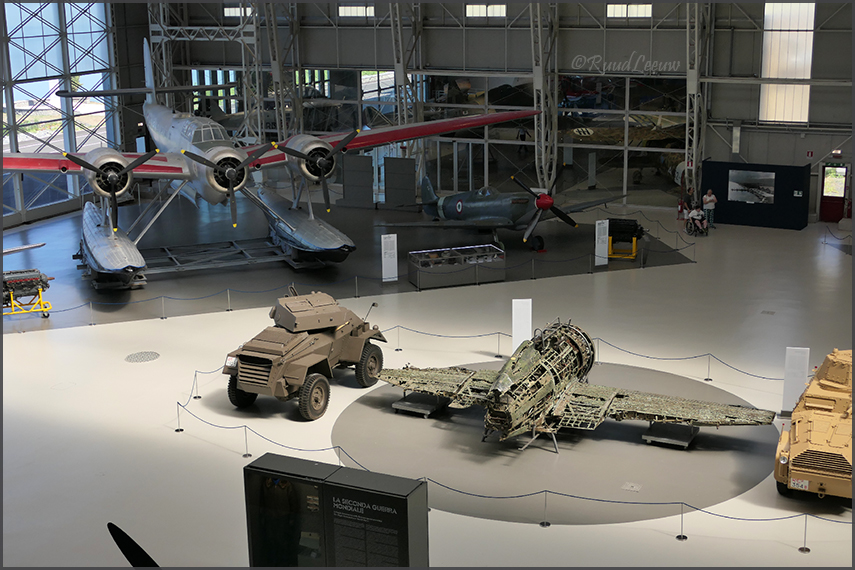
The hangars are light and wide, have plenty of space: a museum that will last for a century..

Museo Storico Aeronautica Militare (MUSAM), Vigna di Valle 2023

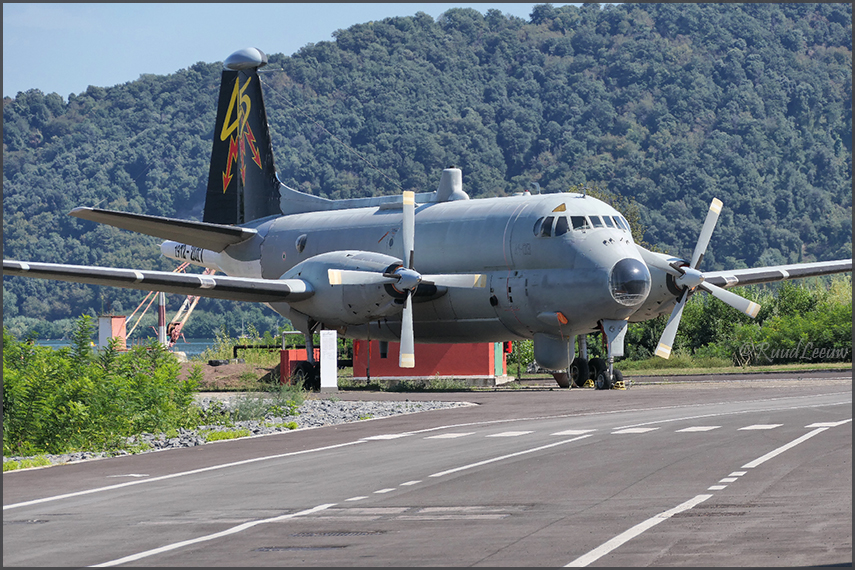
Museo Storico Aeronautica Militare (MUSAM), Vigna di Valle 2023
The tailboom has '1972-2017'. I did not walk all the way down, so I did not get the registration: EMAIL
This Breguet Atlantic is not listed in my Ogden's Air-Britan reference guide, see below. But I found an interesting photo on www.planespotters.net with all the required data: Dassault-Breguet Br.1150 Atlantique, mm40118 (c/n 80) while on 18Oct2018 it was flown (final flight!) into Vigna Di Valle (LIRB), dangling on ropes underneath an S-64F Skycrane (with the very fine Bracciano castle in the background!).

Museo Storico Aeronautica Militare (MUSAM), Vigna di Valle 2023
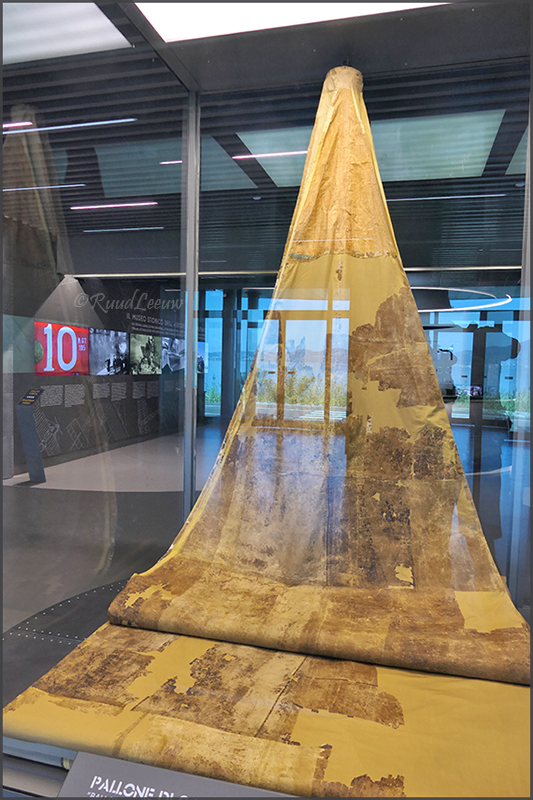
The true pioneering era!


Museo Storico Aeronautica Militare (MUSAM), Vigna di Valle 2023


Museo Storico Aeronautica Militare (MUSAM), Vigna di Valle 2023
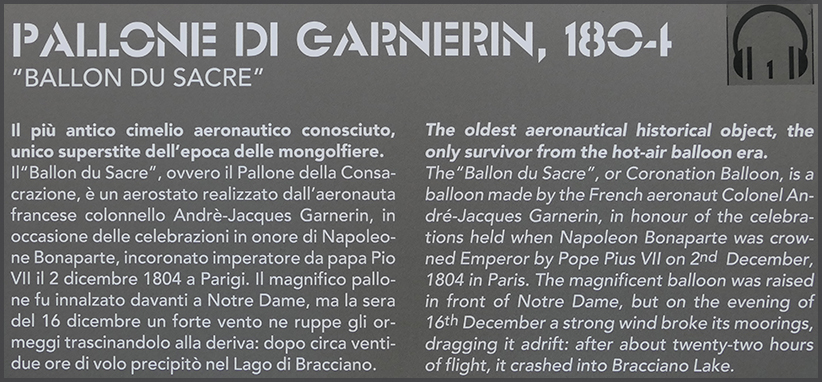
The oldest aeronautical historical object, the only survivor from the
hot-air balloon era. PALLONE DI GARNERIN, 1804

Museo Storico Aeronautica Militare (MUSAM), Vigna di Valle 2023

Museo Storico Aeronautica Militare (MUSAM), Vigna di Valle 2023
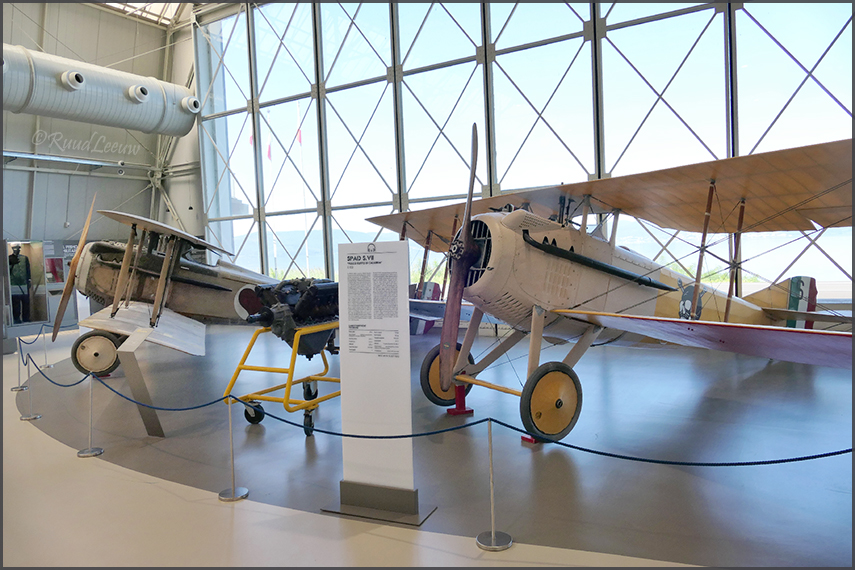
Spad S.VII 'Ernesto Cabruna', S 1505
Museo Storico Aeronautica Militare (MUSAM), Vigna di Valle 2023

Museo Storico Aeronautica Militare (MUSAM), Vigna di Valle 2023
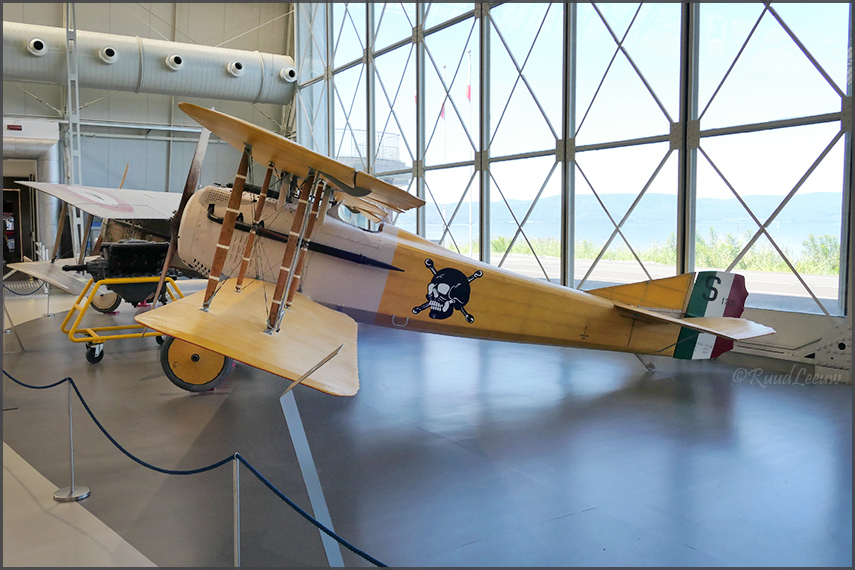
Spad S.VII 'Fulco Ruffo di Calabria', S 153
Museo Storico Aeronautica Militare (MUSAM), Vigna di Valle 2023
When I see these WWI biplanes I always go back to the days I devoured the Biggles paperbacks a long time ago!

Museo Storico Aeronautica Militare (MUSAM), Vigna di Valle 2023
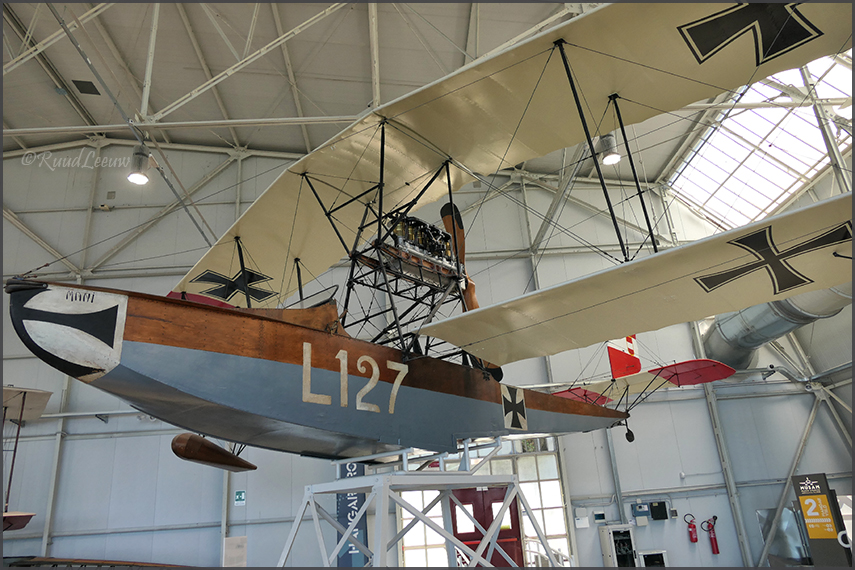
Lohner L-1, L127

The Lohner L was a reconnaissance flying boat produced in Austria-Hungary during World War I.
It was a two-bay biplane of typical configuration for the flying boats of the day, with its pusher engine mounted on struts in the interplane gap. The pilot and observer sat side by side in an open cockpit, and both the upper and lower sets of wings featured sweepback.
The design was essentially a more powerful version of the Lohner E, and became highly influential. Apart from licensed production by UFAG, the L provided the basis for designs by other major manufacturers.
In Germany, Hansa-Brandenburg manufactured a modified version of it as their first flying boat, the Brandenburg FB, and in Italy, a captured example was used as a pattern aircraft by Macchi, who produced it as the L.1.
In turn, the L.1 would provide the foundation for a large number of Macchi designs over the coming years.
The L.1s were delivered to Italian maritime reconnaissance and bombing units based on the Adriatic. [¬Wikipedia]


Museo Storico Aeronautica Militare (MUSAM), Vigna di Valle 2023
These posters also offer a lot of history (one more for my 'LOOK' series)

Museo Storico Aeronautica Militare (MUSAM), Vigna di Valle 2023
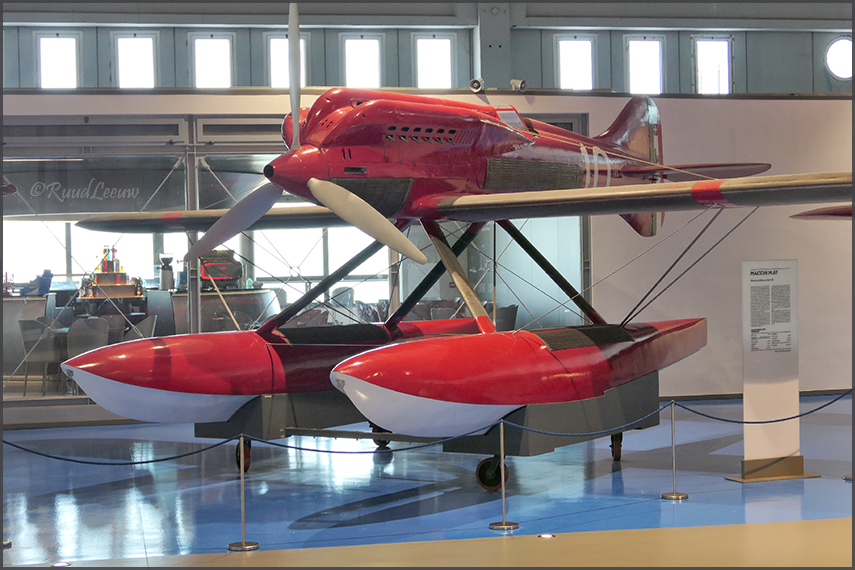
Macchi M.67, mm105

The Macchi M.67, was an Italian racing seaplane designed by Mario Castoldi and built by Macchi for the 1929 Schneider Trophy race.
Castoldi based the design of the M.67, (a single-seat, low-wing, monoplane, twin-float floatplane), on that of the earlier Macchi M.39, which had competed for Italy in the 1926 and 1927 Schneider Trophy races.
The M.67s underwent testing on Lake Garda in northern Italy.
In August 1929 Regia Aeronautica (Italian Royal Air Force) Captain Giuseppe Motta was killed when his M.67 suddenly dived into the lake during a test flight in which he reached 583 kilometers per hour (362 miles per hour). Italy asked the 1929 race's hosts, the British Royal Aero Club, to postpone the race to allow Italy to correct the flaws in the M.67 and Asso 1000 engine, but the British refused. The Italians decided to enter the two surviving M.67s in the race despite the risk to their pilots. [¬Wikipedia]

Museo Storico Aeronautica Militare (MUSAM), Vigna di Valle 2023
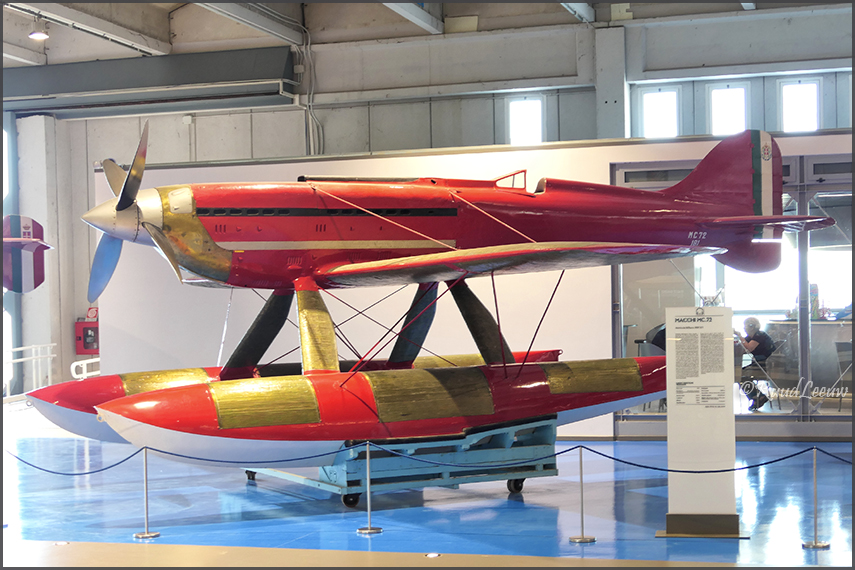
Macchi MC.72, mm181

The Macchi M.C. 72 is an experimental seaplane designed and built by the Italian aircraft company Macchi Aeronautica.
The M.C. 72 held the world speed record for all aircraft for five years. In 1933 and 1934 it set world speed records for piston engine-powered seaplanes; the latter still stands.
In the 1920s, Macchi focused on speed and on winning the Schneider Trophy. In 1922 the company hired aircraft designer Mario Castoldi to design high-speed aircraft.
In 1926 the company won the trophy with the M.39, which attained a top speed of 396 km/h (246 mph).
Further aircraft, the M.52, M.52R and the M.67, were designed and built but victory in the Schneider races kept eluding the Italians.
Castoldi then designed the M.C. 72, a single-seater aircraft with two floats powered by a modified FIAT AS.6 supercharged V24 engine, generating around 1.900-2.300 kW (2.500-3.100 hp), driving contra-rotating propellers.
The forward part of the M.C. 72's fuselage is constructed of metal; aft of the cockpit it is of wood.
The M.C. 72 was built in 1931 for what turned out to be the final Schneider Trophy race, but due to engine problems was unable to compete. [¬Wikipedia]


Museo Storico Aeronautica Militare (MUSAM), Vigna di Valle 2023
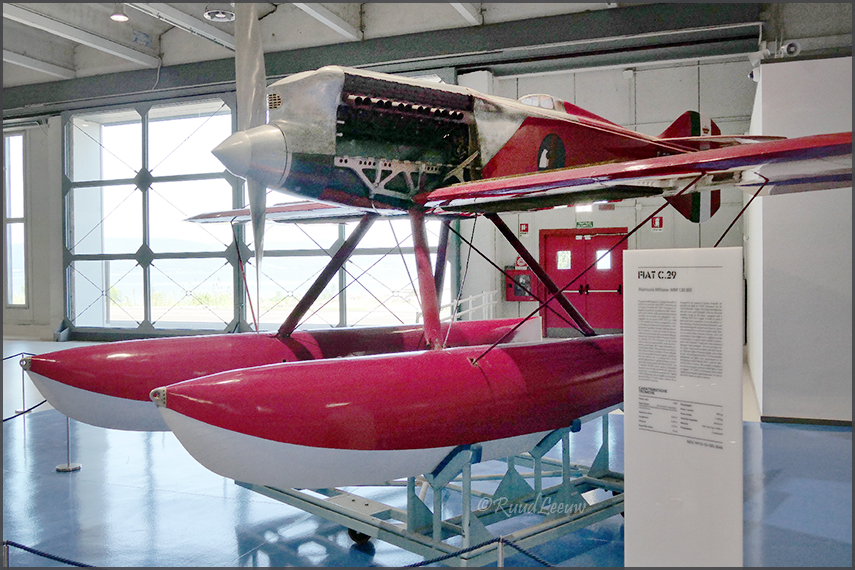
Fiat C.29, mm130 bis

The Fiat C.29 was an Italian racing seaplane designed by Celestino Rosatelli and built in the late-1920s by Fiat Aviazione especially for the 1929 Schneider Trophy air race.
Unused in the race, of the three aircraft built, two were destroyed in flying accidents while the third is on display in a museum... [¬Wikipedia]

Museo Storico Aeronautica Militare (MUSAM), Vigna di Valle 2023
When I look at these seaplane racers I think of the adventures of TinTin (NL: 'Kuifje'; www.tintin.com/en)..

Museo Storico Aeronautica Militare (MUSAM), Vigna di Valle 2023
What a strange contraption this is! Perhaps the vessel under a zeppelin..? (EMAIL)


Museo Storico Aeronautica Militare (MUSAM), Vigna di Valle 2023
Ansaldo AC.2, mm1208 | 94-6
Museo Storico Aeronautica Militare (MUSAM), Vigna di Valle 2023
Ansaldo AC.2, mm1208

Museo Storico Aeronautica Militare (MUSAM), Vigna di Valle 2023

The Dewoitine D.1 was a French single-seat fighter aircraft of the 1920s, built by the French industrial company Dewoitine. The D.1 was the first airplane designed by Emile Dewoitine after he established his own company. The D.1 was designed to meet requirements issued by the French Service Technique de l'Aeronautique.
The D.1 was demonstrated in several countries. Yugoslavia purchased 79, Switzerland two, and Japan one. Italy purchased one, but then constructed 112 of their own version under the designation Ansaldo AC.2.
Wikipedia]


Museo Storico Aeronautica Militare (MUSAM), Vigna di Valle 2023
Caproni 100, I-GTAB (mm65156). Note the delicate undercarriage.
Primary user: Regia Aeronautica. Number built c.700.

Museo Storico Aeronautica Militare (MUSAM), Vigna di Valle 2023
en.wikipedia.org:_Caproni_Ca.100

Museo Storico Aeronautica Militare (MUSAM), Vigna di Valle 2023
Fiat CR.32, 328 / 3-6

The Fiat CR.32 was an Italian biplane fighter used in the Spanish Civil War and the Second World War.
Designed by the aeronautical engineer Celestino Rosatelli, it was a compact, robust and highly manoeuvrable aircraft for its era, leading to it being a relatively popular fighter during the 1930s.
The CR.32 fought in North and East Africa, in Albania, and in the Mediterranean theatre.
It was extensively used in the Spanish Civil War, where it gained a reputation as one of the most outstanding fighter biplanes of all time!
It also saw service in the air forces of China, Austria, Hungary, Paraguay and Venezuela. [¬Wikipedia]


Museo Storico Aeronautica Militare (MUSAM), Vigna di Valle 2023
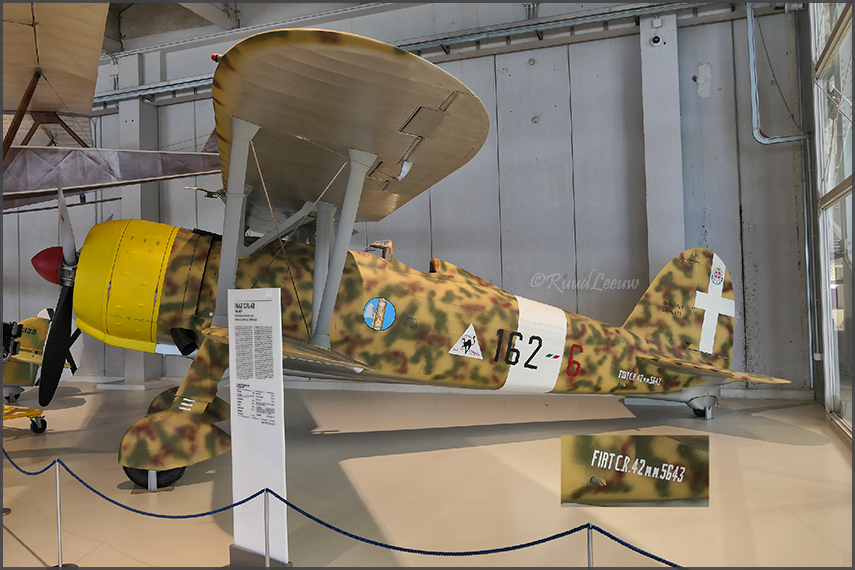
Fiat CR.42, mm5643

The Fiat CR.42 Falco ('Falcon', plural: Falchi) is a single-seat sesquiplane (where one wing, usually the lower, is significantly smaller than the other) fighter developed and produced by Italian aircraft manufacturer Fiat Aviazione.
It served primarily in the Italian Regia Aeronautica in the 1930s and during the WW2.
The CR.42 was an evolution of Fiat’s earlier CR.32 fighter, featuring a more powerful supercharged Fiat A.74R1C.38 air-cooled radial engine and aerodynamic improvements to its relatively clean exterior surfaces.
Wikipedia]


Museo Storico Aeronautica Militare (MUSAM), Vigna di Valle 2023
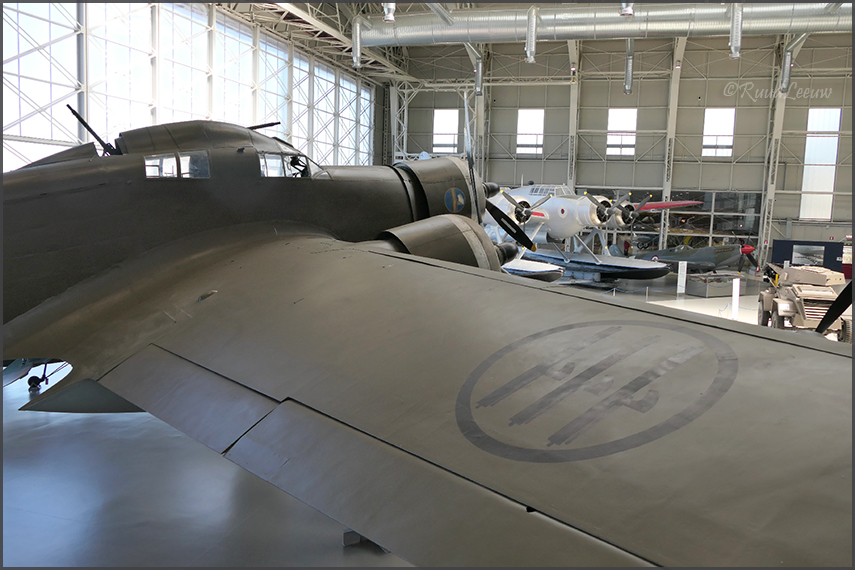
Savoia-Marchetti SM.82PW, mm61187 | ZR-8

Museo Storico Aeronautica Militare (MUSAM), Vigna di Valle 2023
Note the double-deck windows.

The Savoia-Marchetti SM.82 'Marsupiale' was an Italian bomber and transport aircraft of World War II.
It was a cantilever, mid-wing monoplane trimotor with a retractable, tailwheel undercarriage.
There were 875 (plus one prototype) built, the first entering service in 1940.
Although able to operate as a bomber with a maximum bombload of up to 8,818 lb (4000 kg), the SM.82 saw very limited use in this role.
The SM.82 was the foreign aircraft used in largest number by the Luftwaffe, which operated several hundreds of this aircraft, as a transport.
Post-war about 30 SM.82s continued in service with the Aeronautica Militare Italiana, many remaining in service until the early 1960s. [¬Wikipedia]

Museo Storico Aeronautica Militare (MUSAM), Vigna di Valle 2023
Savoia-Marchetti SM.82PW, mm61187 | ZR-8
Museo Storico Aeronautica Militare (MUSAM), Vigna di Valle 2023
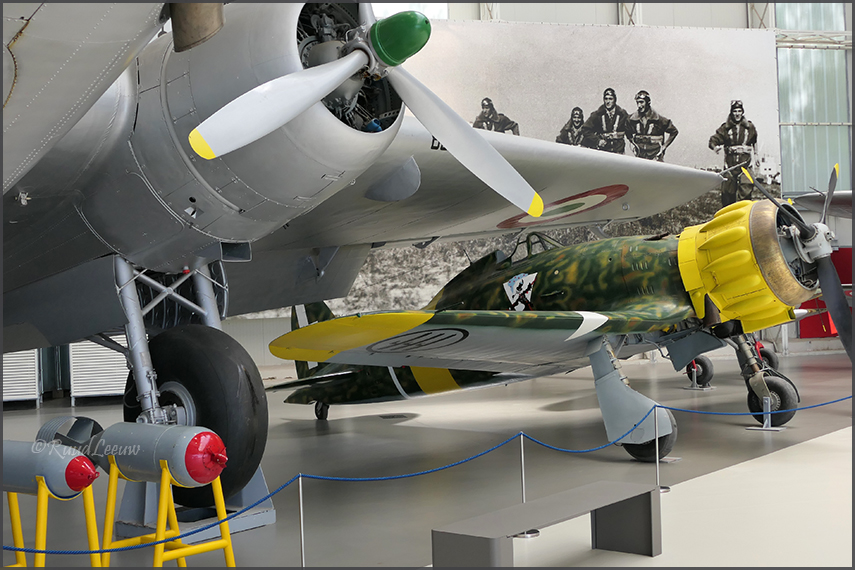
Macchi C.200 'Saetta', 'mm5311' (orig. mm8307, 'M7707')
Museo Storico Aeronautica Militare (MUSAM), Vigna di Valle 2023

Museo Storico Aeronautica Militare (MUSAM), Vigna di Valle 2023

The Macchi C.200 Saetta (EN: 'Lightning'), or MC.200, was a fighter aircraft developed and manufactured by Aeronautica Macchi in Italy.
Various versions were flown by the Regia Aeronautica (Italian Air Force) who used the type throughout WW2.
The C.200 was designed by Mario Castoldi, Macchi's lead designer, to serve as a modern monoplane fighter aircraft, furnished with retractable landing gear and powered by a radial engine.
The C.200 possessed excellent maneuverability, and its general flying characteristics left little to be desired.
Its stability in a high-speed dive was exceptional, but it was underpowered and underarmed in comparison to its contemporaries. [¬Wikipedia]


Museo Storico Aeronautica Militare (MUSAM), Vigna di Valle 2023
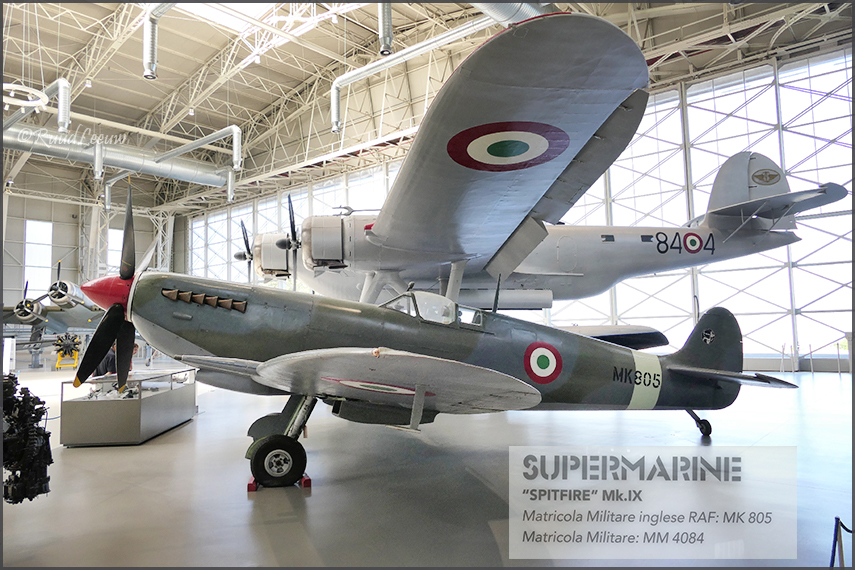
Supermarine Spitfire Mk.IX, mm4084 (ex/ RAF MK805)

Museo Storico Aeronautica Militare (MUSAM), Vigna di Valle 2023
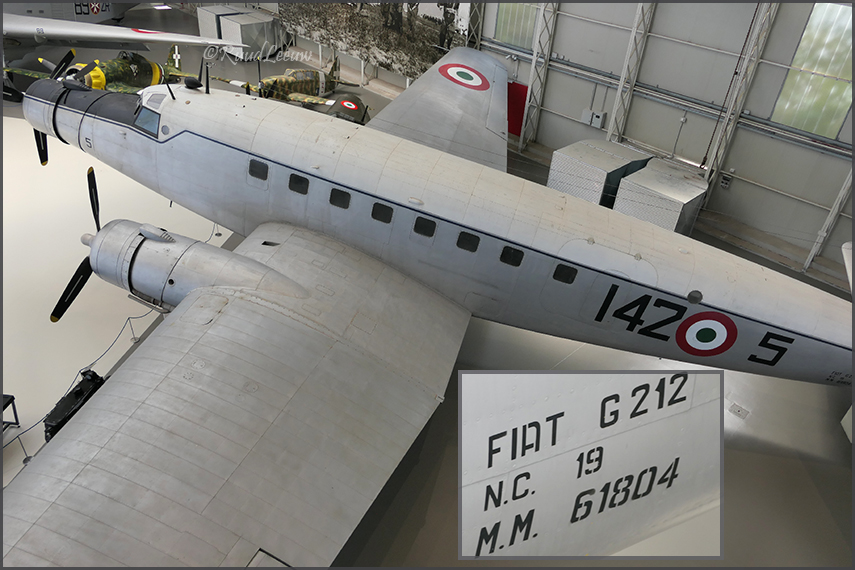
Fiat G.212, mm 61804 | 142-5

The Fiat G.212 was an Italian three-engine airliner of the 1940s. An enlarged development of Fiat's earlier G.12 transport, it was used in small numbers in commercial service and by the Italian Air Force.
The first prototype of the G.212, the G.212CA military transport, flew on 19Jan1947.
While very similar in configuration to the G.12, i.e. a low-wing all-metal cantilever monoplane with a retractable tailwheel undercarriage, the G.212 was longer, and had a larger wing and a wider fuselage. It was powered by three 860 hp Alfa Romeo 128 radial engines. [¬Wikipedia]

Museo Storico Aeronautica Militare (MUSAM), Vigna di Valle 2023

The G.212CP entered service with Avio Linee Italiane (Italian Airlines), which ordered 6, in 1947, being operated on routes within Europe.
On Thursday 1Jul1948 I-ELSA, a flight from Milano to Brussels, crashed near Keerbergen airfield (8 people died). One of the surviving crewmembers died 6 months later in the crash of an ALI Douglas C47 at Milano airport...
On 04May1949, a chartered Avio Linee Italiane G.212, carrying the Torino football first team squad 'the Grande Torino' back home from a match in Lisbon, crashed into a hill near Turin, killing all 31 aboard, including the 18 players. [¬Wikipedia]


Museo Storico Aeronautica Militare (MUSAM), Vigna di Valle 2023
Reggiane Re.2002, mm8669
Museo Storico Aeronautica Militare (MUSAM), Vigna di Valle 2023
'Ariette II'

The Reggiane Re.2002 'Ariete' (EN: Ram) was an Italian fighter-bomber developed during World War II.
The aircraft was a further development of the Re.2000, with some of the modifications that already had been introduced in the Re.2001.
The aircraft was mainly used by the Regia Aeronautica (Royal [Italian] Air Force), but it also saw limited use with the German Luftwaffe, who used it against the French resistance.
The first prototype flew in Oct. 1940, approximately three months after the Re.2001. The evaluation period showed some reliability problems with the Piaggio engine and therefore the aircraft served primarily as an attack aircraft instead, as it could carry a considerable payload, by Italian standards. [¬Wikipedia]

I was quite amazed by the number of Italian manufactured, and flown, aircraft of which I had never heard! Museo Storico Aeronautica Militare (MUSAM), Vigna di Valle 2023
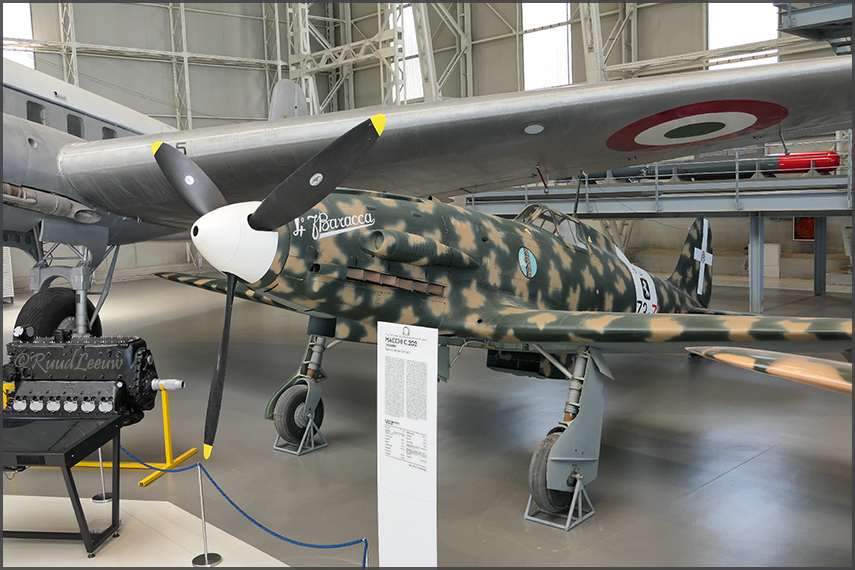
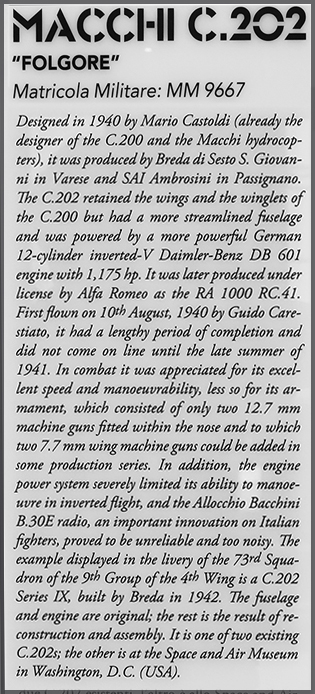
Macchi C.202, mm9667 | 73-7

Museo Storico Aeronautica Militare (MUSAM), Vigna di Valle 2023

The Macchi C.202 'Folgore' (Italian for Thunderbolt) was an Italian fighter aircraft developed and manufactured by Macchi Aeronautica. It was operated mainly by the Regia Aeronautica (RA; Royal (Italian) Air Force) in and around the WW2.
According to aviation author David Mondey, the Folgore has been considered to be one of the best wartime fighters to serve in large numbers with the Regia Aeronautica!
The C.202 was designed by a team headed by the company's chief of design, Italian aeronautics engineer Mario Castoldi. As per company tradition, Macchi aircraft designed by Mario Castoldi received the 'C' letter in their model designation, hence the Folgore is commonly referred to as the C.202 or MC.202. [¬Wikipedia]


Museo Storico Aeronautica Militare (MUSAM), Vigna di Valle 2023
Macchi C.205V 'Veltro', mm9546 | 97-2

Museo Storico Aeronautica Militare (MUSAM), Vigna di Valle 2023

The Macchi C.205 Veltro ('Greyhound' which was also known as MC.205: MC standing for 'Macchi Castoldi') was an Italian World War II fighter aircraft, built by the Aeronautica Macchi.
Along with the Reggiane Re.2005 and Fiat G.55, the Macchi C.205 was one of the 3 'Serie 5' Italian fighters built around the powerful Daimler-Benz DB 605 engine.
The C.205 was a development of the earlier C.202 Folgore.
With a top speed of some 640 km/h (400 mph) and equipped with a pair of 20 mm cannon as well as 12.7mm Breda machine guns, the Macchi C.205 Veltro was highly respected by Allied and Axis pilots alike!
Widely regarded as one of the best Italian aircraft of World War II, it proved to be extremely effective, destroying a large number of Allied bombers. [¬Wikipedia]


Museo Storico Aeronautica Militare (MUSAM), Vigna di Valle 2023
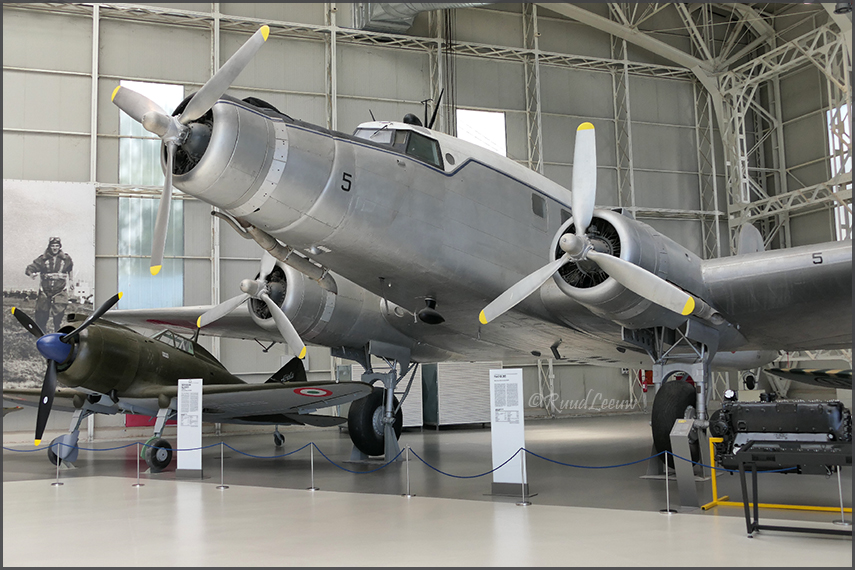
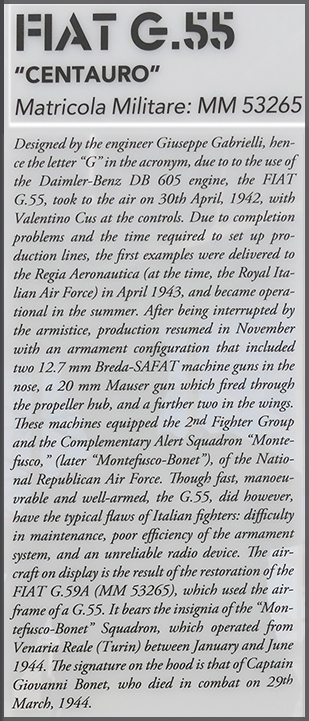
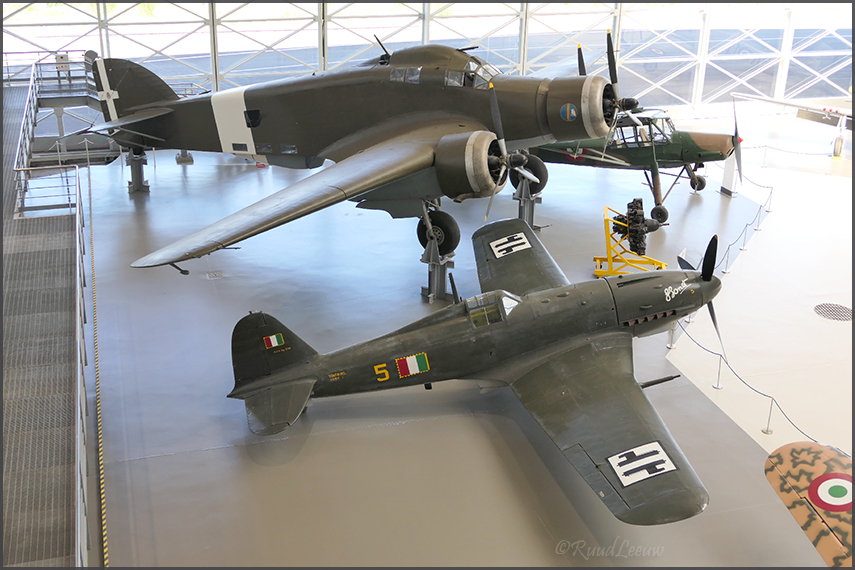
Fiat G.55, mm53265 | 5

Museo Storico Aeronautica Militare (MUSAM), Vigna di Valle 2023

The Fiat G.55 Centauro ('Centaur') was a single-engine single-seat World War II fighter aircraft used by the Regia Aeronautica and the Aeronautica Nazionale Repubblicana in 1943–1945. It was designed and built in Turin by Fiat.
The Fiat G.55 was arguably the best type produced in Italy during World War II (a subjective claim also frequently made for the Macchi C.205 Veltro as well as for the Reggiane Re.2005 Sagittario) but it did not enter production until 1943.
After comparative tests against the Messerschmitt Bf 109G and the Focke-Wulf 190, the Luftwaffe itself regarded the Fiat G.55 as "the best Axis fighter"...! [¬Wikipedia]


Museo Storico Aeronautica Militare (MUSAM), Vigna di Valle 2023
SIAI-Marchetti S.79 Sparviero, mm45508

The Savoia-Marchetti SM.79 Sparviero (Italian for sparrowhawk) was a three-engined Italian medium bomber developed and manufactured by aviation company Savoia-Marchetti.
It may be the best-known Italian aeroplane of WW2.
The SM.79 was easily recognizable due to its fuselage's distinctive dorsal 'hump', and was reportedly well liked by its crews, who nicknamed it il gobbo maledetto (=damned hunchback). [¬Wikipedia]


Museo Storico Aeronautica Militare (MUSAM), Vigna di Valle 2023
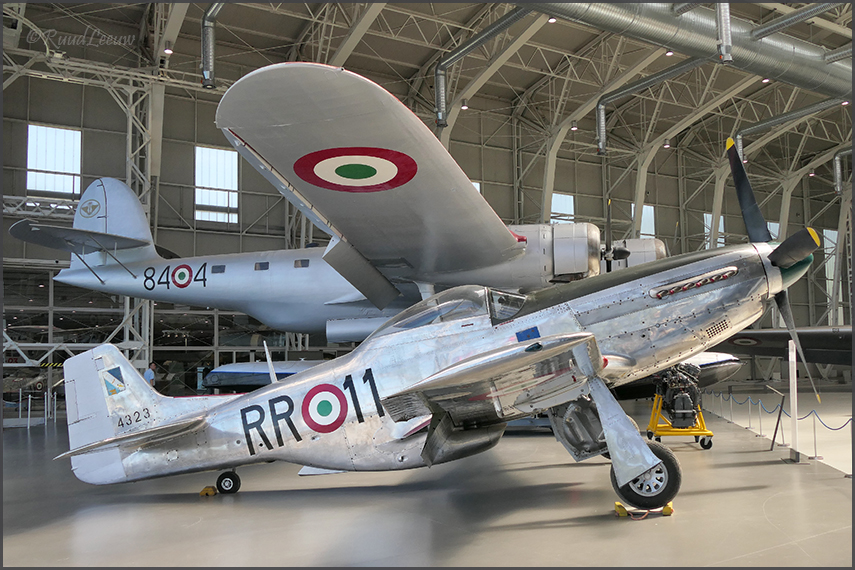
North American P-51 Mustang, mm4323 | RR-11

Museo Storico Aeronautica Militare (MUSAM), Vigna di Valle 2023

Museo Storico Aeronautica Militare (MUSAM), Vigna di Valle 2023
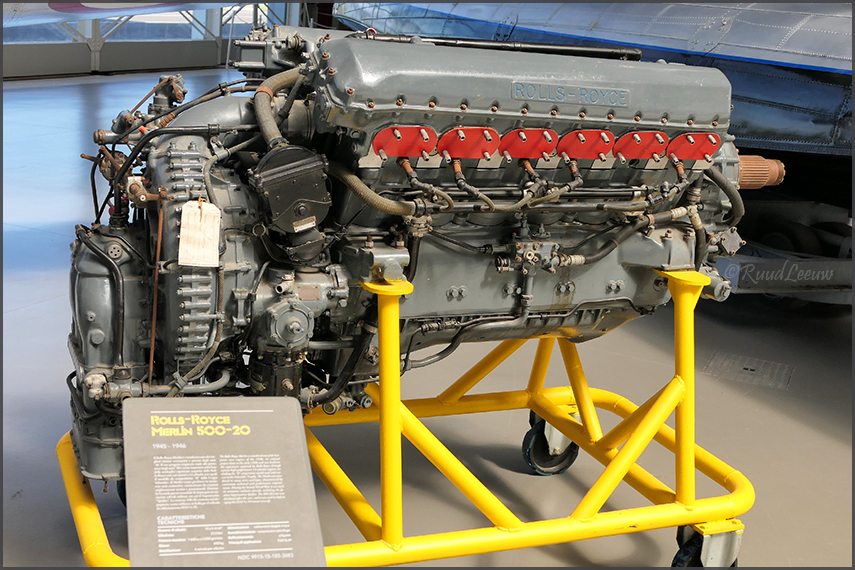
Rolls-Royce Merlin 500-20 engine; it allowed the P-51s to escort the Allied bombers over Germany
Museo Storico Aeronautica Militare (MUSAM), Vigna di Valle 2023
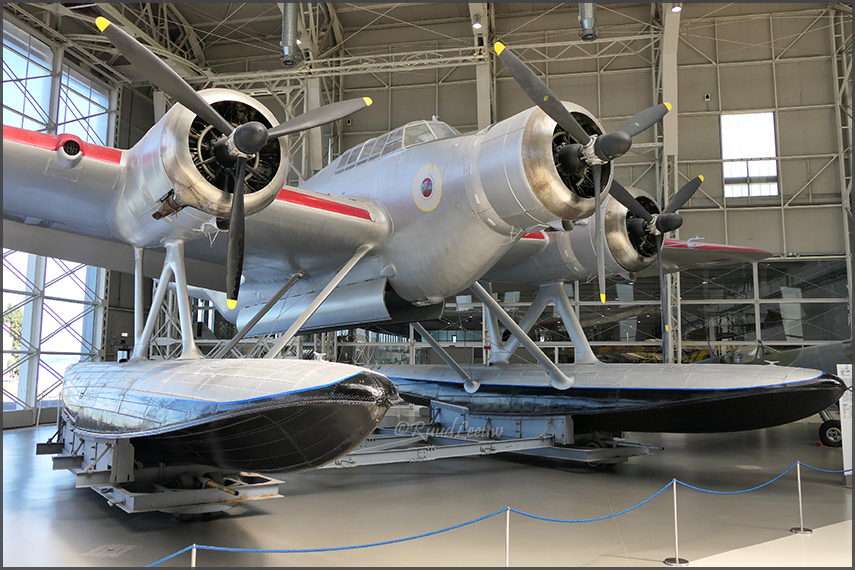
CANT Z.506S 'Airone', 'mm45442' (mm45425)

The CANT Z.506 Airone ('Heron') was a trimotor floatplane produced by CANT from 1935.
It served as a transport and postal aircraft with the Italian airline 'Ala Littoria'.
It established 10 world records in 1936 and another 10 in 1937!
During World War II it was used as a reconnaissance aircraft, bomber and air-sea rescue plane, by the Italian Regia Aeronautica and Regia Marina, Aeronautica Cobelligerante del Sud, Aeronautica Nazionale Repubblicana and the Luftwaffe.
The military version revealed itself to be one of the best floatplanes ever built!
Despite its wooden structure it was able to operate in very rough seas.
A number of Z.506S air-sea rescue aircraft remained in service until 1959. [¬Wikipedia]


Museo Storico Aeronautica Militare (MUSAM), Vigna di Valle 2023
SIAI-Marchetti S.79 Sparviero

Museo Storico Aeronautica Militare (MUSAM), Vigna di Valle 2023
Such a splendid accommodation to have these historic planes preserved for future generations!
Museo Storico Aeronautica Militare (MUSAM), Vigna di Valle 2023
SIAI-Marchetti S.79 and Fiat G.55

Museo Storico Aeronautica Militare (MUSAM), Vigna di Valle 2023
Fiat G.212, mm 61804 | 142-5

Museo Storico Aeronautica Militare (MUSAM), Vigna di Valle 2023
Fiat G.212, mm 61804 | 142-5

Museo Storico Aeronautica Militare (MUSAM), Vigna di Valle 2023


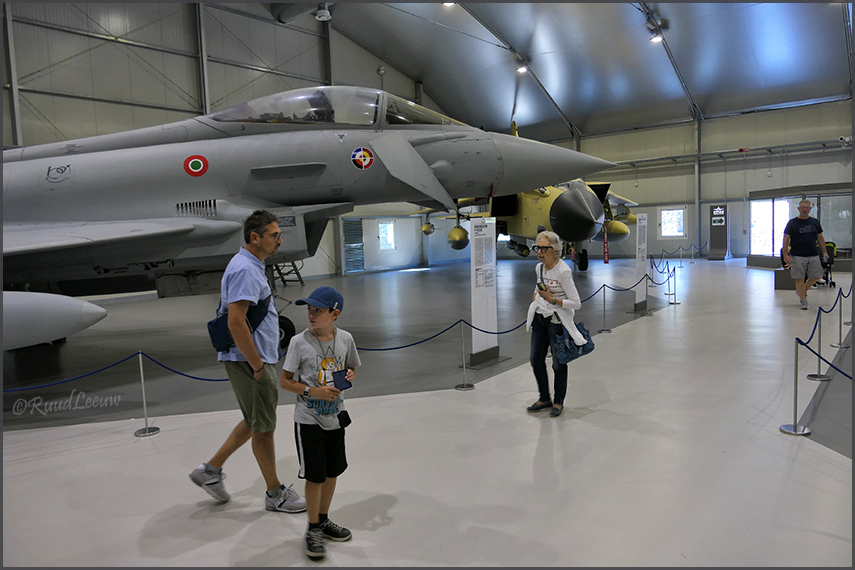
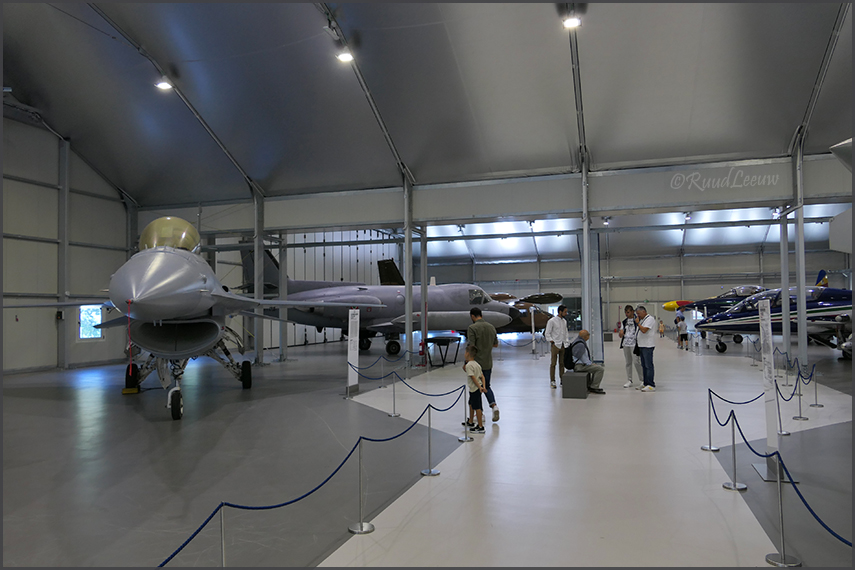
Jets of all ages..
Museo Storico Aeronautica Militare (MUSAM), Vigna di Valle 2023

Museo Storico Aeronautica Militare (MUSAM), Vigna di Valle 2023
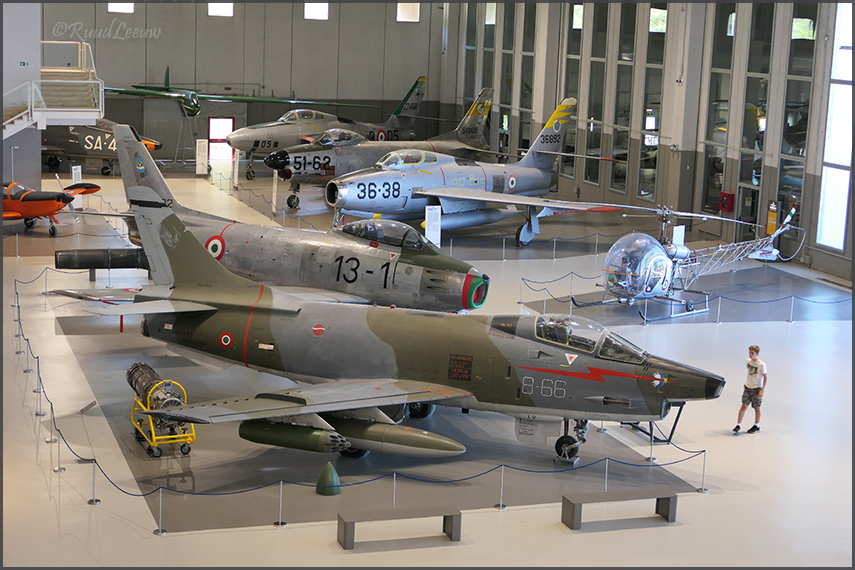
Fiat G-91Y, Canadair CL-13 Mk.4 (North American) F-86E Sabre, Republic F-84F Thunderstreak 56892 (53-6892), North American F-86K (ex/55-4868) Sabre, Republic F-84F Thunderflash (ex/52-7458).
en.wikipedia.org:_List_of_surviving_North_American_F-86_Sabres

Museo Storico Aeronautica Militare (MUSAM), Vigna di Valle 2023
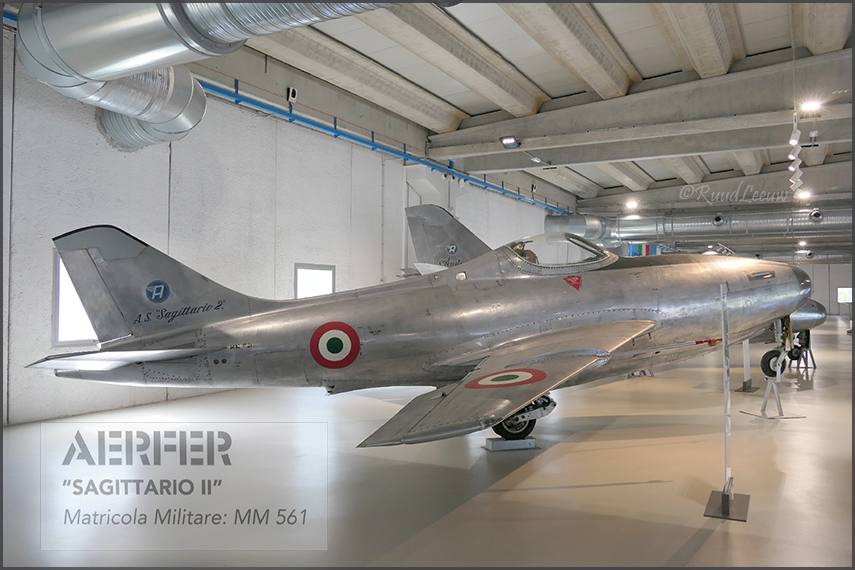
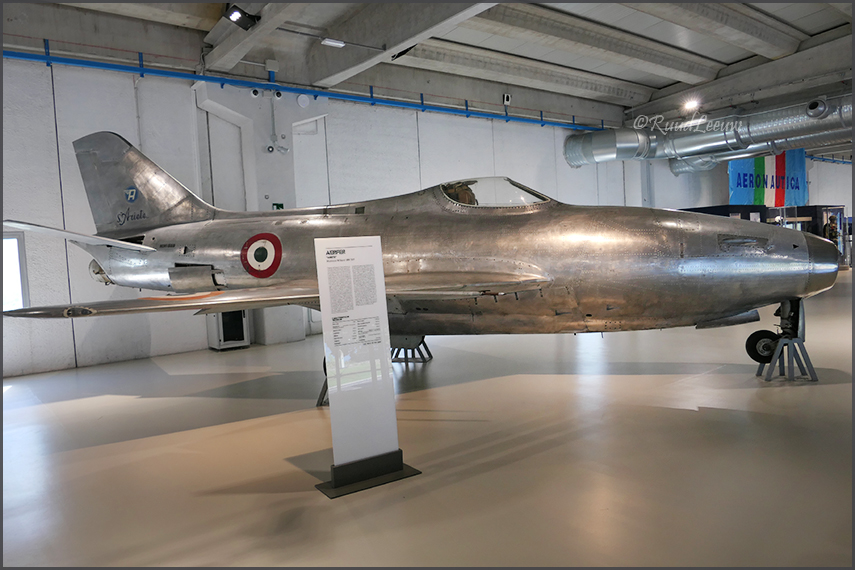
AERFER Sagittario II, mm561

The Aerfer Sagittario 2 (Italian for sagittarius) was a prototype all-metal single-seat lightweight fighter aircraft built in Italy by Aerfer, intended to serve as an interceptor or light tactical support aircraft.
First flown in 1956, it became the first Italian aircraft to break the sound barrier in controlled flight when it reached Mach 1.1 during a dive from 13,725 m (45,000 ft). [¬Wikipedia]

Museo Storico Aeronautica Militare (MUSAM), Vigna di Valle 2023Aerfer Ariete, mm569

Museo Storico Aeronautica Militare (MUSAM), Vigna di Valle 2023

The Aerfer Ariete (Italian for Ram or Aries) was a prototype fighter aircraft built in Italy in 1958.
It was a refined derivative of the Aerfer Sagittario 2, and was an attempt to bring that aircraft up to a standard where it could be mass-produced as a viable combat aircraft.
Retaining most of the Sagittario 2's layout with a nose intake and ventral exhaust for the main Derwent engine, the Ariete added a Rolls-Royce Soar RS.2 auxiliary turbojet engine to provide additional power for climbing and sprinting.
This used a dorsal, retractable intake with its exhaust at the tail.
No production ensued. [¬Wikipedia]

Museo Storico Aeronautica Militare (MUSAM), Vigna di Valle 2023

Canadair CL-13 Mk.4 (North American) F-86E Sabre, Republic F-84F Thunderstreak 56892 (53-6892), North American F-86K (ex/55-4868) Sabre, Republic F-84F Thunderflash (ex/52-7458).
Museo Storico Aeronautica Militare (MUSAM), Vigna di Valle 2023
Jets of the Korean War era..


Museo Storico Aeronautica Militare (MUSAM), Vigna di Valle 2023
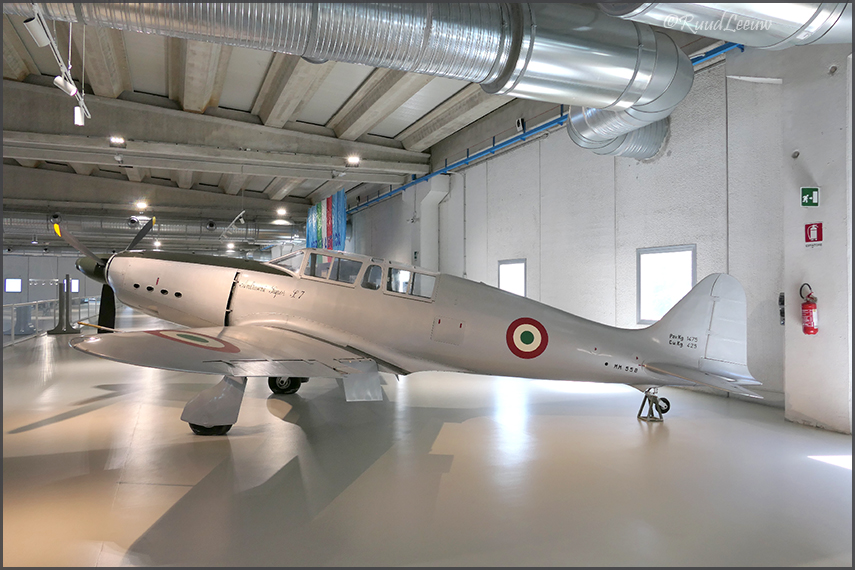
SAI Ambrosini Super S.7, mm558

Museo Storico Aeronautica Militare (MUSAM), Vigna di Valle 2023

The Ambrosini SAI.7 was an Italian racing aircraft flown before World War II that entered production as a military trainer (designated simply S.7) after the war.
It was of conventional configuration, constructed of wood, with a tail-wheel undercarriage.
Power was provided by an air-cooled, inverted inline engine, the Alfa-Romeo model 115 with 225 horsepower.
During the war, the Regia Aeronautica expressed interest in the aircraft as a trainer for fighter pilots, and a slightly revised version entered limited production in 1943 as the SAI.7T.
Only 10 were built, but in 1949, a modernised version powered by an Alfa Romeo engine was produced, 145 of them for the reformed Italian Air Force, including some single-seaters. [¬Wikipedia]

Museo Storico Aeronautica Militare (MUSAM), Vigna di Valle 2023

Museo Storico Aeronautica Militare (MUSAM), Vigna di Valle 2023
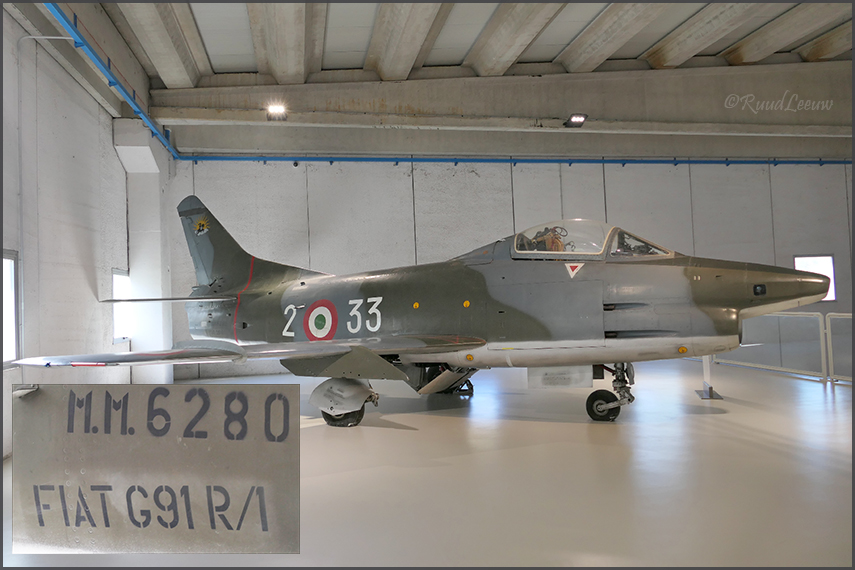
Fiat G.91 R/1, mm6280 | 2-33

Museo Storico Aeronautica Militare (MUSAM), Vigna di Valle 2023
Photo reconnaissance ('recce')

Museo Storico Aeronautica Militare (MUSAM), Vigna di Valle 2023
Fiat G.91T (trainer), mm6344 | SA-47

Museo Storico Aeronautica Militare (MUSAM), Vigna di Valle 2023Aermacchi MB.326E (2-seat trainer), mm54389 | 68

Museo Storico Aeronautica Militare (MUSAM), Vigna di Valle 2023

Museo Storico Aeronautica Militare (MUSAM), Vigna di Valle 2023
Aermacchi MB.326E (trainer), mm54389 | 68
Museo Storico Aeronautica Militare (MUSAM), Vigna di Valle 2023
Fiat G.91T (trainer), mm6344 | SA-47

Museo Storico Aeronautica Militare (MUSAM), Vigna di Valle 2023
Fiat G.80-38, mm53882 | RS-22

The Fiat G.80 was a military jet trainer designed and produced by the Italian aircraft manufacturer Fiat.
It has the distinction of being the first true jet-powered indigenous aircraft to be flown by Italy.
The G.80 was designed as the first Italian turbojet-powered aircraft as well as to fulfil the training requirements of the Aeronautica Militare.
It was powered by a single British-sourced deHavilland Goblin turbojet engine.
The pilot and instructor sat in a tandem configuration underneath a lengthy bubble canopy.
On 09Dec1951, the first prototype G.80 performed its maiden flight. [¬Wikipedia]


Museo Storico Aeronautica Militare (MUSAM), Vigna di Valle 2023
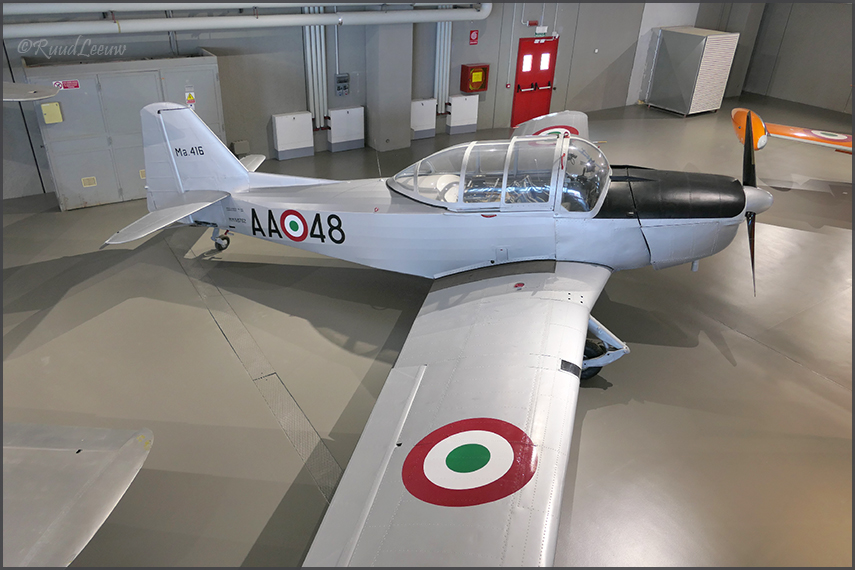
Macchi M.416 (Fokker S-11), mm53762 (c/n 1059) | AA-48 (ex/ I-AELY)
Museo Storico Aeronautica Militare (MUSAM), Vigna di Valle 2023

The Fokker S-11 Instructor is a single-engine two-seater propeller aircraft designed and manufactured by the Dutch aircraft manufacturer Fokker.
It first flew in December 1947 and went on production, serving in several Air Forces in the late 20th century, including with Dutch, Italian, Israeli, Paraguay, Bolivian and Brazilian armed forces.
Some 170 aircraft were license built in Italy as the Macchi M.416.

A limited number of S-11 Instructors are still flying today. The Dutch Fokker Four foundation, dedicated to the preservation of this aircraft, operates four S-11s and still performs with them on airshows. [¬Wikipedia]


Museo Storico Aeronautica Militare (MUSAM), Vigna di Valle 2023
North American T-6G Texan/Harvard IV, mm54097 | RR-67

Museo Storico Aeronautica Militare (MUSAM), Vigna di Valle 2023
en.wikipedia.org:_North_American_T-6_Texan

Museo Storico Aeronautica Militare (MUSAM), Vigna di Valle 2023
Fiat G.46-4A, mm53286 | Z.I-7

Museo Storico Aeronautica Militare (MUSAM), Vigna di Valle 2023

The Fiat G.46 was a military trainer developed in Italy shortly after World War II.
The G.46 was a conventional, low-wing monoplane with tailwheel undercarriage, the main units of which retracted inwards. The pilot and instructor sat in tandem under a long canopy.
The first prototype, powered by a 205 hp (153 kW) Alfa Romeo 115-Ibis engine, made its maiden flight on 25Jun1947.
Testing revealed excellent flying characteristics and suitability for aerobatics, and the type was ordered into production.
Apart from the 150 ordered by the Aeronautica Militare, 70 aircraft were exported, to Austria, Argentina and Syria. [¬Wikipedia]

Fiat G.59-4B Centauro, mm53276 | SE-7
Museo Storico Aeronautica Militare (MUSAM), Vigna di Valle 2023

Museo Storico Aeronautica Militare (MUSAM), Vigna di Valle 2023
Fiat G.59, mm53276 (c/n 61) | SE-7
Museo Storico Aeronautica Militare (MUSAM), Vigna di Valle 2023

The Fiat G.55 Centauro (Italian: 'Centaur') was a single-engine single-seat World War II fighter aircraft used by the Regia Aeronautica and the Aeronautica Nazionale Repubblicana in 1943–1945.
It was designed and built in Turin by Fiat.
The Fiat G.55 was arguably the best type produced in Italy during World War II (a subjective claim also frequently made for the Macchi C.205 Veltro as well as for the Reggiane Re.2005 Sagittario) but it did not enter production until 1943.
After comparative tests against the Messerschmitt Bf 109G and the Focke-Wulf 190, the Luftwaffe itself regarded the Fiat G.55 as "the best Axis fighter"! [¬Wikipedia]


Museo Storico Aeronautica Militare (MUSAM), Vigna di Valle 2023
Lockheed T-33A (RT-33A), 35594 / 9-35 (ex/ 53-5594, Turkish AF 35594)

Museo Storico Aeronautica Militare (MUSAM), Vigna di Valle 2023
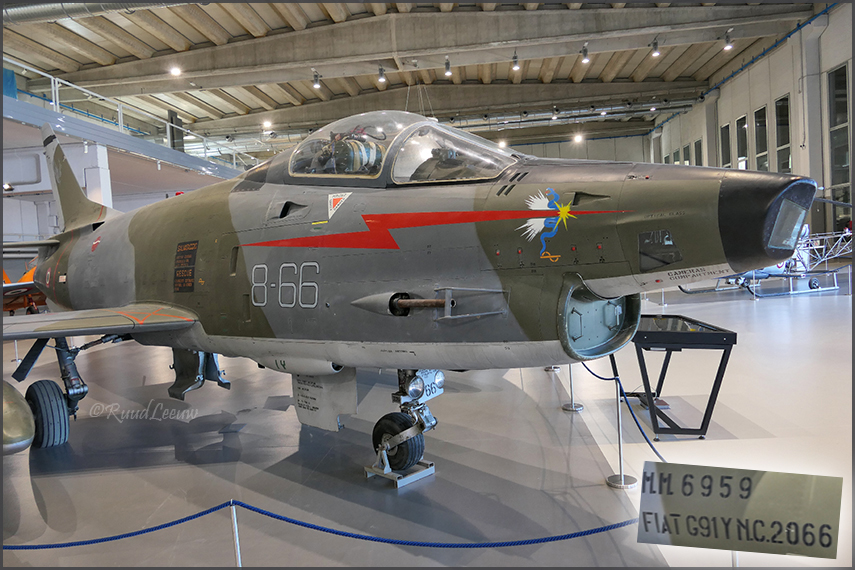
Fiat G.91Y, mm6959 | 8-66

Museo Storico Aeronautica Militare (MUSAM), Vigna di Valle 2023

Museo Storico Aeronautica Militare (MUSAM), Vigna di Valle 2023
You know you're getting old when military fighters are retired to a museum while they were introduced after
I gave up on military aircraft photography in the 1990s.

Museo Storico Aeronautica Militare (MUSAM), Vigna di Valle 2023


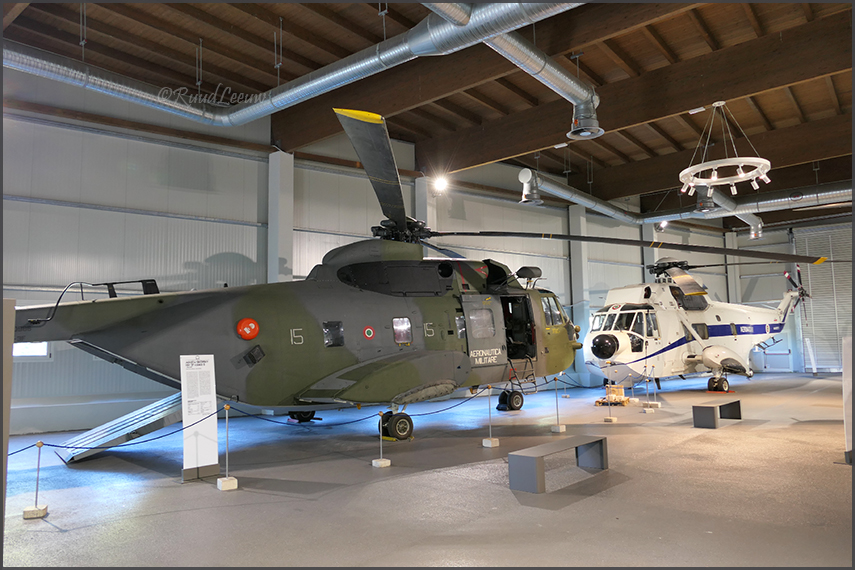
Helos, a.k.a. Choppers
Museo Storico Aeronautica Militare (MUSAM), Vigna di Valle 2023

Museo Storico Aeronautica Militare (MUSAM), Vigna di Valle 2023

Museo Storico Aeronautica Militare (MUSAM), Vigna di Valle 2023

Museo Storico Aeronautica Militare (MUSAM), Vigna di Valle 2023


Museo Storico Aeronautica Militare (MUSAM), Vigna di Valle 2023

Museo Storico Aeronautica Militare (MUSAM), Vigna di Valle 2023

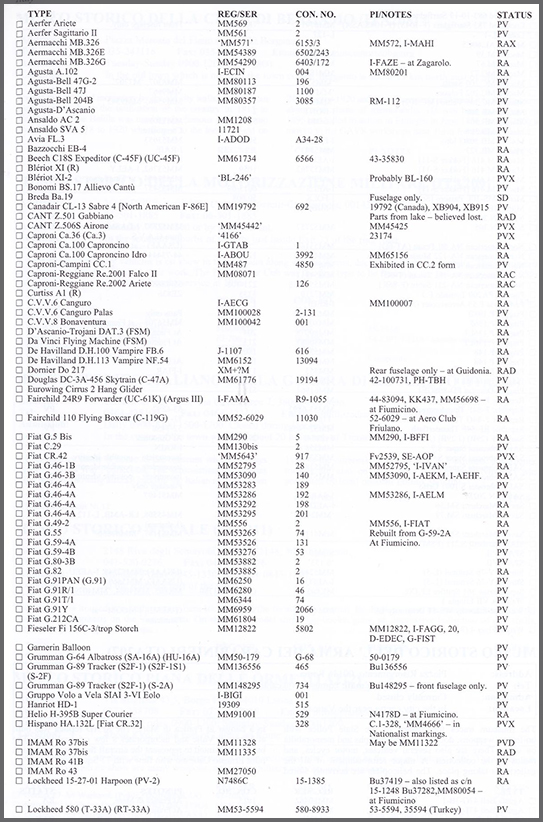
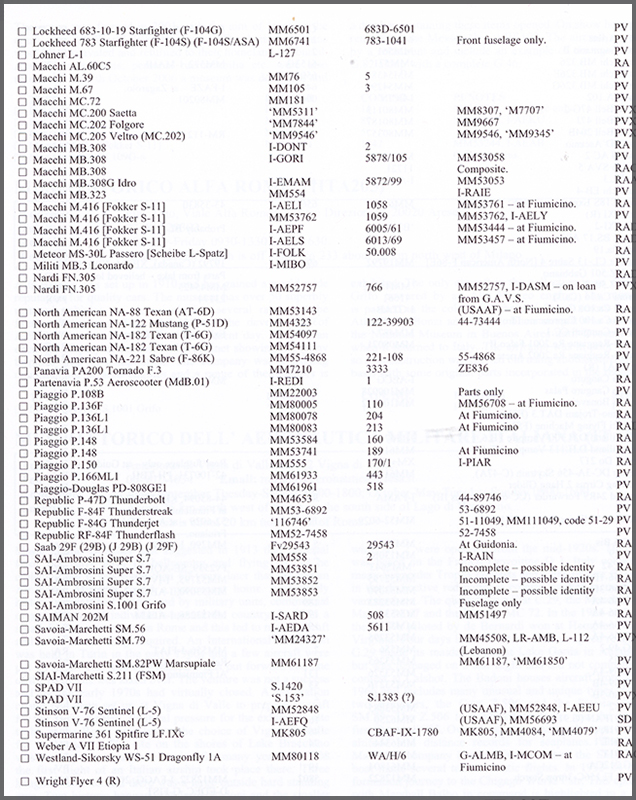
Bob Ogden's guidebooks for aviation museums and -collections are an invaluable support:
Click on thumbnail


NL.wikipedia.org:_Museo_storico_dell'Aeronautica_Militare_di_Vigna_di_Valle
www.aviationmuseum.eu/World/Europe/Italy/Vigna_di_Valle/Museo_Storico_dell_AMI
www.aeronautica.difesa.it/home/storia-e-tradizione/museo-storico/


To email me, click on the image and write the correct adress as given below
(replace -AT- by the @ symbol).

Sorry for the inconvenience, but this is because spam has increasingly become a problem.

Created: 07-Nov-2023 | Updated 11-Nov-2023