| A word about (and by) Neville Webb's interest in aviation: FOR LATEST UPDATES --->> To bottom page |
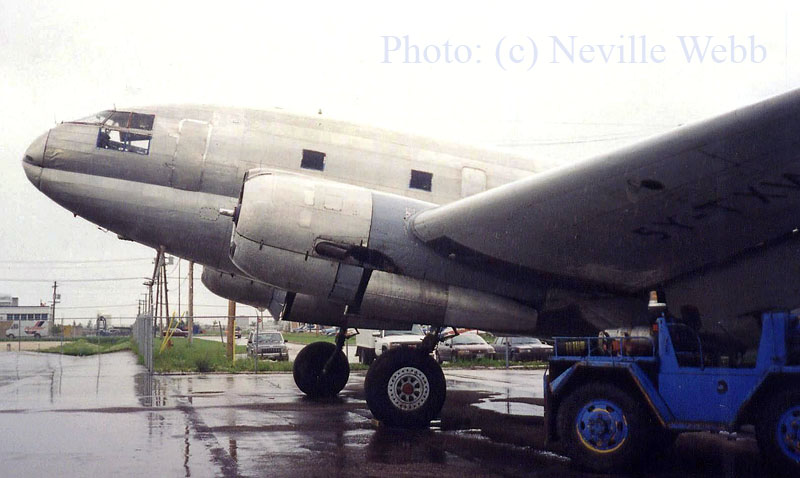
![]() This undentified Curtiss C-46 Commando was photographed by Neville at Winnipeg (maybe June 1998), taken at the Industrial side of Winnipeg Airport (likely the former Air Manitoba hanger).
"These C-46 pictures were taken while travelling through Winnipeg and Red Lake, while the photos at Sandy Lake See my Gimli 2007 report, featuring a.o. this C-GIBX |
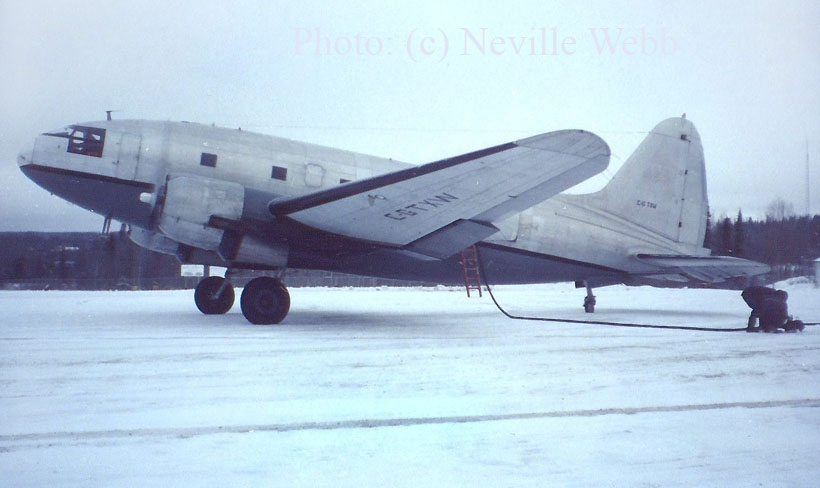
Curtiss C-46A Commando C-GTXW (c/n 30386) is seen here on a fuel-hauling flight at Sandy Lake, northwest Ontario. (Date described by Neville as 'around 2000'.)
Yellowknife, July 2006 looking very good. |
![]() C-46A c/n 30386 was briefly registered 5Y-TXW, as seen here. Air Manitoba had put it up for sale and registration C-GTXW was cancelled in August 1994. In 1995 it was reregistered 5Y-TXW for Air Kenya but soon returned to Canada; it was reported at Bar River in April 1996, still registered as 5Y-TXW. On 23Oct96 it was registered to Commando Air Transport. Reg'd 14nov01 to Buffalo Airways (C-GTXW). They tried to sell it in 2004, with damaged C-FAVO, but no luck.
|
|
| "Newfoundland and Labrador (Gander and Goose Bay) played an important part role wartime aviation (remember Ferry Command's effort in WW2) and post-war propeller aircraft passenger aviation. It has been said there are over one hundred wreck sites in the province... Having a background in working with aircraft allows one to study site remains from archeological and technical perspectives, to identify aircraft components and allow for some description of event happenings." |
| Neville wrote: "These are pictures of a USAF C-47 crash site. In past years, I have made three or four visits. The C-47 was, I believe, on a flight from Goose Bay to Torbay (St. John's airport) with a load of jeep parts and impacted about 3 metres below the top of a hill, at the base of trees: 4 metres higher and/or 20 metres to the left... and tragedy would have been averted!" Neville found information on : http://accident-report.com, which provided the following details- DATE: November 24, 1943 AIRCRAFT: C-47A SERIAL NUMBER: 42-100496 PILOT: Lee D Graham LOCATION: 3 miles NW of Torbay, Newfoundland REMARKS: Hit Hill in Flight |
Neville offered the following information:A photo of unidentified aircraft remains on the airfield at Swift Current, Sask in 1970. Not much left to identify this wrecked bird..! |
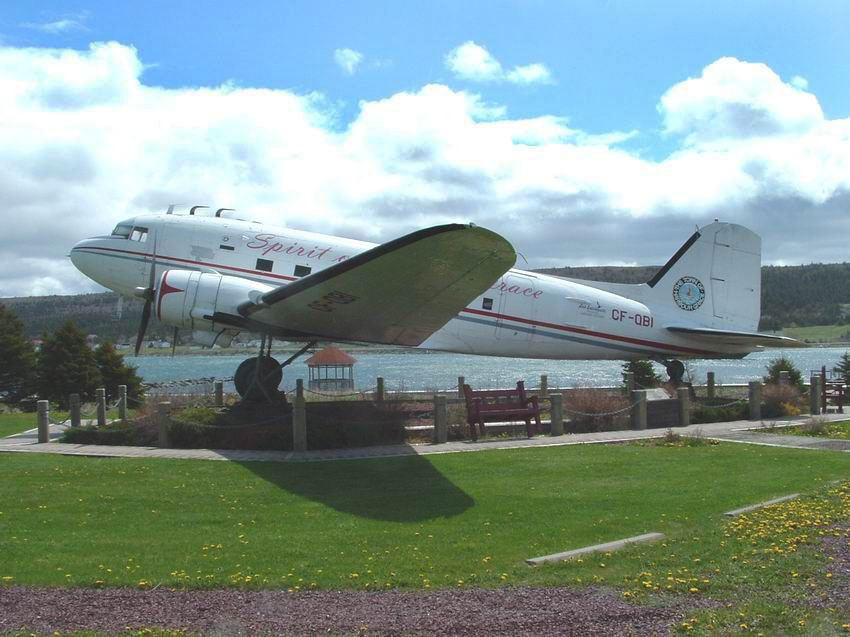
From 1953 until 1977, CF-QBI was flown by Quebec Air. In 1977 Mr. Roger Pike bought the aircraft for use on cargo flights between Stephenville and Goose Bay. In 1983 Mr. Pike became owner of of Labrador Airways Ltd., and based CF-QBI at Goose Bay for mail and freight
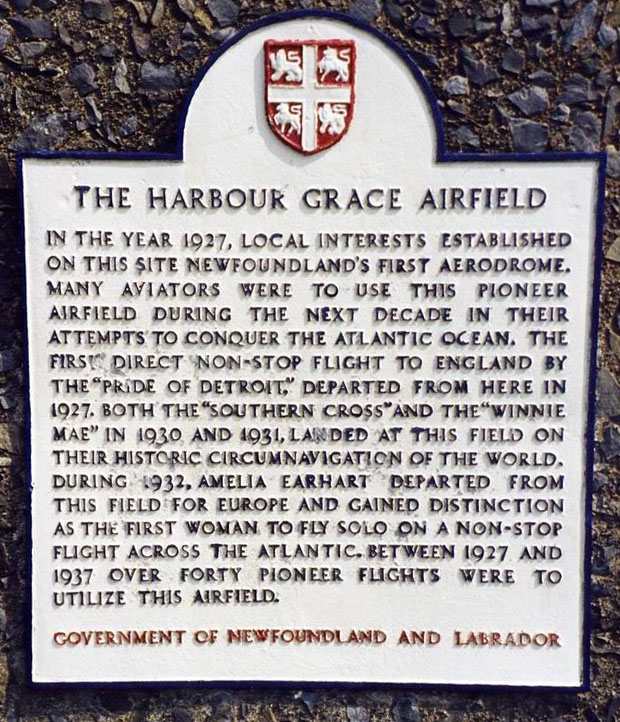
flights. CF-QBI was retired in 1988 and in 1993 the aircraft was presented to the Town of Harbour Grace. The aircraft stands in a small park area adjacent to the road and some eighty metres from the shoreline.CF-QBI whilst in service of Quebecair on Airliners.net |
|
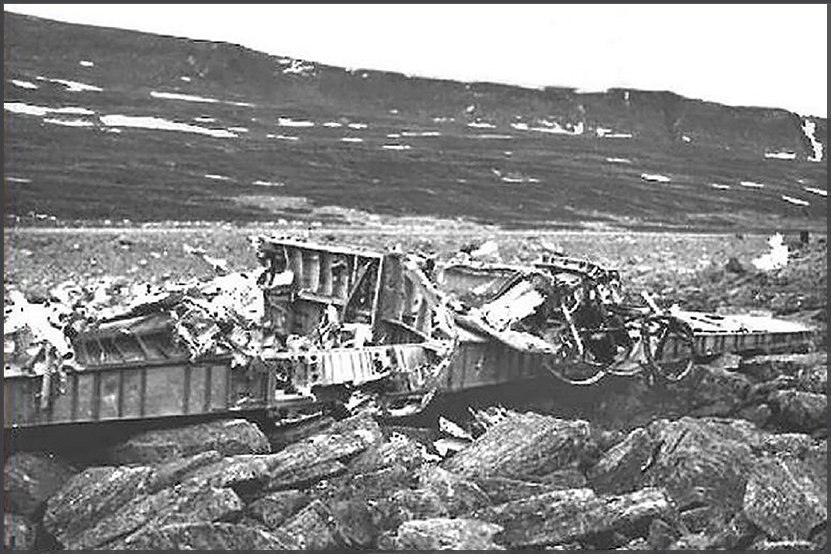
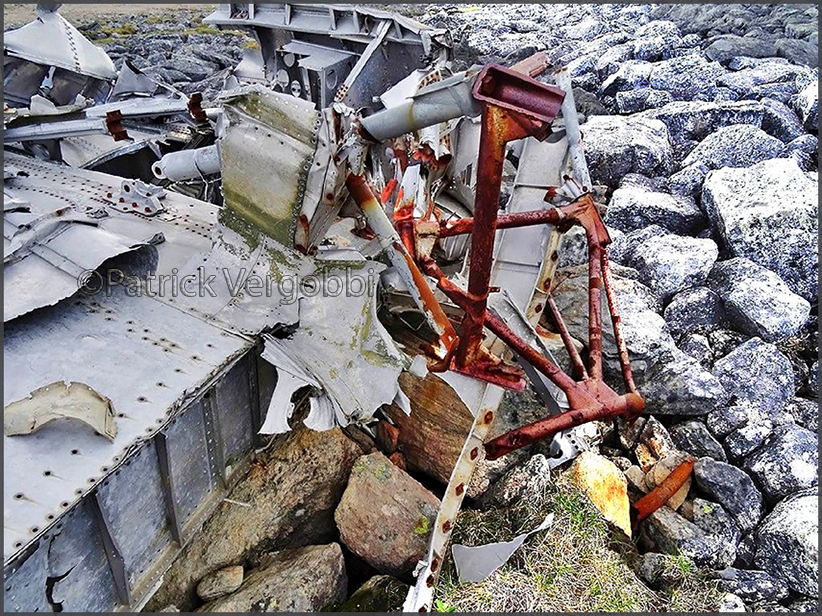
Dirk Septer wrote an item on about the B-36 crash on my page Abandoned Plane Wrecks of the North Neville wrote me about a 21Sep2018 re-visit.
Drone Overflight Videos Youtube, 12 September 2018 Crash report on Aviation Safety Network (ASN) |
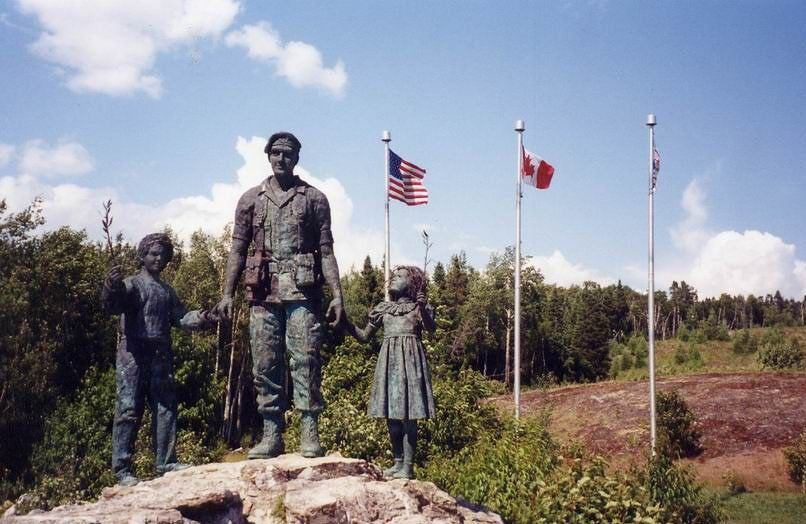
Following a refuelling stop at Gander on the morning of 12 December 1985, all 256 Americans
on board the Air Arrow DC8 died when the aircraft plunged into the ground, shortly after lift-off
and totally burned in the post crash fire...The crash site is at the edge of Gander Lake, almost in-line with runway 22. The 248 soldiers of the 3d Battalion, 502d Infantry, 101st Airborne Division and eight crew members were travelling from Sinai back to the U.S. for the X-mas holidays.
Turning off the Trans-Canada Highway, vistors can make a short drive to the edge of Gander Lake, to visit the Memorial. Photos taken around 1997 or 1998. Accident details on Aviation Safety Network |
| GANDER AVIATION HERITAGE Gander's aviation history goes back to 1937 when construction began on what would be at that time the largest civil airport in the world with four paved runways. On a great circle route, Gander was ideally placed for trans-Atlantic flights. As the only operating airport in Atlantic and Maritime regions at the outbreak of war, Gander was strategically located as a staging base for the stream of military aircraft bound for Europe. In 1942 the Government of Newfoundland turned over the operation of the airport to the Government of Canada through the RCAF. At war's end, Gander became the "Crossroads of the World" for transoceanic flights. However, the advent of the "jet age" adversely impacted air traffic, as jet aircraft now had the range to directly cross the Atlantic. During the 1980's carriers from Eastern Europe used the airport as a stopover on flights to the Americas such as Havana. Today, Gander is used by heavy cargo carriers, corporate and private jets. |
NORTH ATLANTIC AVIATION MUSEUM (Gander Aviation Museum)
This aviation heritage museum is located in Gander, adjacent to the Trans-Canada Highway, and opened its new building on March 1996. Displays inside include a DH Tiger Moth, engines, aviation artefacts and memorabilia, including photographs and archives related to North Atlantic aviation and Gander in particular. |
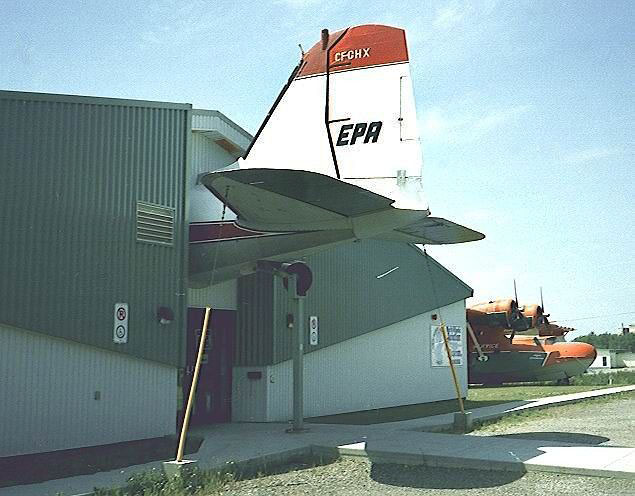
The tail section of this DC-3 is mounted over the main entrance, while the nose section of the aircraft is at the rear of the building.Visitors can enter the cockpit from inside the museum. The aircraft has Eastern Provincial Airlines markings (EPA). |
| From 'Flying the Frontiers Vol.III' by Shirlee Smith Matheson (subtitled 'Aviation Adventures Around the World'), the chapter 'The Merger of the Masters' has a quote by Chuck MacLaren (volunteer at Edmonton's Alberta Aviation Museum) when asked what his favourite aircraft he'd even been working on as a mecanic, was: CF-GHX. I quote from that book- "When I worked for Gunnar Nesbitt Aviation we changed 30 engines - all full time with 1.100 hours on each of them - on one DC-3", MacLaren says. That was CF-GHX. It flew from Edmonton to Uranium City, 365 trips a year. for 10 years!". (Not sure if the following refers to CF-GHX from that book, but a fine tale nevertheless, quoting MacLaren)- MacLaren reflects on adventures with the famous DC-3. "We used to land on the ice on Lake Athabasca where Gunnar Mines was, until we got the runway built. On the last landing of the season, the 24th of May, one wheel went through the ice and it ended up on its wing, putting a three inch bend in the wing... We called for help. With the aid of 50 guys from the mine we picked it up and rolled it about 10 feet onto some planks on good ice. Then the pilots flew it home, with the bend in the wing and everything. The big gradual bend didn't seem to bother it any. It flew pretty straight. Our job when we got home was to reskin the top of the wing because the pressure had made little winkels between the rivets." |
Beech 18SThis aircraft was manufactured by the Beech Aircraft Corporation at Wichita, Kansas. It is on loan from the Gander Campus of College of the North Atlantic. The c/n is A-710 (or CA-110, there seems to be 2 systems) and decorated with a false registration, C-FVPK. Source: OldProps. "Twin Beech" on Wikipedia. |
Lockheed Hudson T9422This aircraft was displayed on a pedestal for many years, near the airport. During World War II, the Hudson was the first of thousands of aircraft to stage through Gander en route to Europe. On November 1940, the first ferry flight was made across the Atlantic of seven Hudson bombers, led by Captain D.C.T Bennett. Lockheed Hudson on Wikipedia. |
| MUSGRAVE HARBOUR: BANTING INTERPRETATION CENTRE
In 1991 the 'Banting Interpretation Center' was built following the airlifting in 1990 of the remains of Hudson T9449 from Seven Mile Pond (Banting Pond) to Banting Park, Musgrave Harbour, Newfoundland. Photos taken in 1997 or 1998. |
|
On Thursday 20Feb41, after being delayed by a blizzard, T9449 piloted by Captain J. Mackey, as part of a group of five Hudson aircraft, departed Gander at 1958 hours. About fifty miles NE of Gander and over the Atlantic, the oil supply to the starboard engine failed and the engine had to be shut down, but the prop failed to feather. After reversing course, heading back to Gander, the port engine also suffered an oil failure... Mackey waited until he was sure T9449 was over land, then ordered the crew of navigator Flying Officer William Bird, the radio operator William Snailham, and passenger Banting to bail out. Descending in darkness, pilot Mackey glided T9449 down to onto the edge of a frozen lake, hitting a tree with the port wing. Regaining consciousness, Mackey found that none of the others had bailed out! Snailham and Bird were killed in the crash. Banting had serious injuries and died the following day. Mackey was not found until the following Monday by a searching aircraft. [The book 'OCEAN BRIDGE, the history of RAF Ferry Command' (by Carl A.Christie) details this accident, as well as the building of Gander and Goose Bay airports and is recommended reading in my opinion (though rather overflowing with details)- Webmaster] |
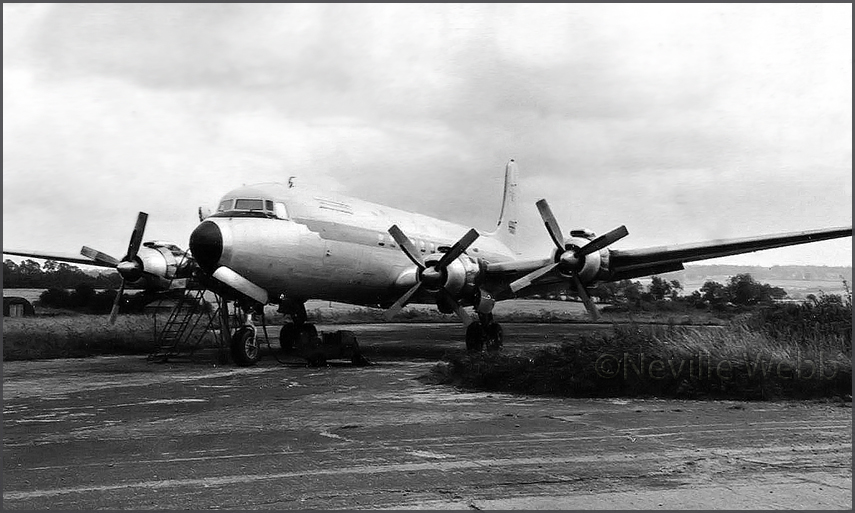
SABENA DC4-1009, OO-CBG (c/n 42986).On 18th September 1946, on a flight from Brussels to New York, OO-CBG crashed while descending through low cloud into a densely wooded area (600 feet ASL ) 22 miles SW of Gander (500 feet ASL). The aircraft was due to land at Gander for a refuelling stop. At that time it was the world's worst aviation accident with 21 of 37 passengers (and 6 of 7 crew) killed.
The accident is notable for the help given to the survivors by two local trappers, who were first at the scene, the efforts made by rescuers to get the survivors out, and the first (important) use of two helicopters to rescue survivors. It was concluded that the pilot in command was carrying out an inappropriate approach with respect to the weather, neglected the strong NNE wind, and likely did not know the aircraft's position relative to the airport. The command pilot requested QFE (height above ground) which was given by the controller as 29.88. At the crash site, the pilot's and navigator's altimeters were found set respectively to 29.40 and 29.90. Another possible contributing cause was a misunderstanding between the pilots of the aircraft's height above ground and actual ASL. Following the crash, a gravesite was established at the site of the crash. The gravesite is called St. Martin in the Woods. This website also details the crash and subsequent rescue: www.zianet.com/tmorris/GanderRescue.html Report on Aviation Safety Network (ASN). |
In Dec.2009 Neville sent another batch of photos to add on this webpage.
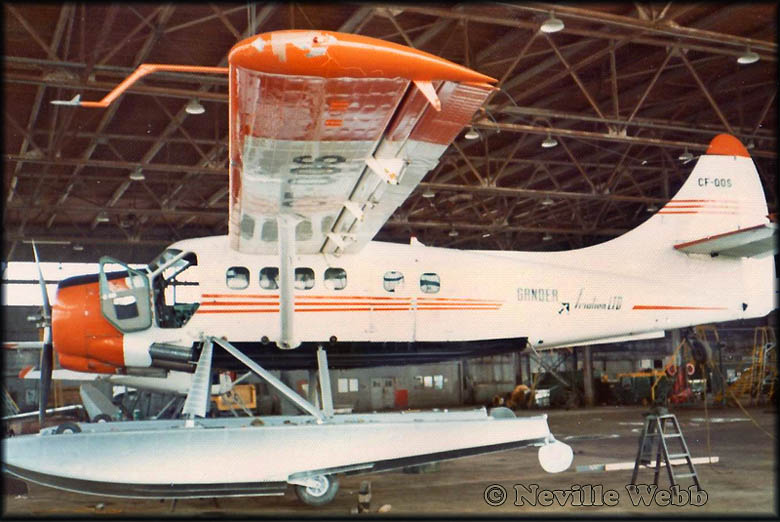
To start with: deHavilland DHC-3 otter CF-QOS (c/n 398) of Gander Aviation. Neville thought he'd taken this photo in 1973, at St.John's.
The authority on the DHC-3 Otter is Karl E. Hayes, who published a monograph on this 'Skytruck of the Bush'. I quote from his work (abbreviated): The Otter somewhat disappeared from view
until July 2007 when during a visit to the Kenai Airport in Alaska it was noted in a
hangar there under rebuild. |
On above images Neville wrote: "CF-NAZ was re-registered as C-GNDZ in 1978 when rebuilt following severe damage sustained in an incident with CAF 10737, Argus - Mar 31 '77. http://tinyurl.com/4gkrx45 This is a story reprinted in Charlottetown Guardian: http://www.theguardian.pe.ca/Living/World/2007-03-31/article-1374354/Vivid-memories-remain-of-fiery-Argus-crash-of-1977/1 This is a link to a Summerside newspaper image of the Electra - after: http://media.photobucket.com/image/argus%20summerside/iceobs/ElectraAccident.jpg?o=1 " Shows a slightly larger version of this image: I include this pic for in Feb.2014 I received following challenging email from Ken Pickford, who wrote: "In connection with the Nordair Lockheed L-188 photos and related information, I question the accuracy of the following statement:
"All information I can find indicates that CF-NAZ was written off after the accident. I can find nothing to indicate that it was rebuilt and re-registered. And if you look at the photo of the damaged L-188 from a newspaper report of the accident, it is hard to believe that aircraft would have (or could have) been repaired." -Ken Pickford Since the newspaper photo supports Ken's statement that it was unlikely that this wreck was rebuilt I investigated further. That same database offers the history of L.188 c/n 1111: Then I found the details on ATDB.Aero database (www.aerotransport.org): Then I asked myself why? Why was the front fuselage required for rebuilding C-GNDZ, surely it was CF-NAZ that was damaged?! Perhaps the term 'rebuilding' contributes to the confusion, perhaps 'modifications' should be used (as well). The answer can be found here: |
![]() Canso Water Bomber in 1973, of the Newfoundland Forestry Service. Taken at St John's Airport (Industrial Side). By the website Warbirdregistry.org I was able to identify Tanker #5 as C-FNJC (c/n CV-430). This website offered the following history: Registration C-FNJC was officially cancelled on 17Dec09, as permanently
retired ('wfu') and is to be preserved. (Aviation Letter 518, jan.2010) |
Neville shared these photographs with me in Nov.2017
|
Neville Webb sent me these in Jan.2018
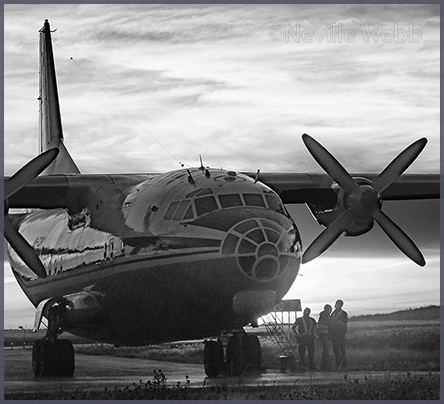
![]() Ukrainian Air Alliance! Wednesday 31 January 2018 Neville wrote me:".... last week [26 Jan?] passed by St. John's Airport YYT and noticed two Antonov An-12BK transport aircraft UR-CAK and UR-CAJ of Ukraine Air Alliance (UAA) at the Irving Aviation ramp! Three DHC-8 aircraft were also parked on the ramp including Bahamasair (!) DeHavilland Canada DHC-8-314 Dash 8-300 aircraft: C6-BFP (ex/ C-GFHZ, OE-LLW, N394DC, G-JEDA, N994DC) and another one cocooned in blue 1. Ukraine Air Alliance (UAA): 2. Bahamasair C6-BFP-300: 3. Irving Aviation, FBO Services: |
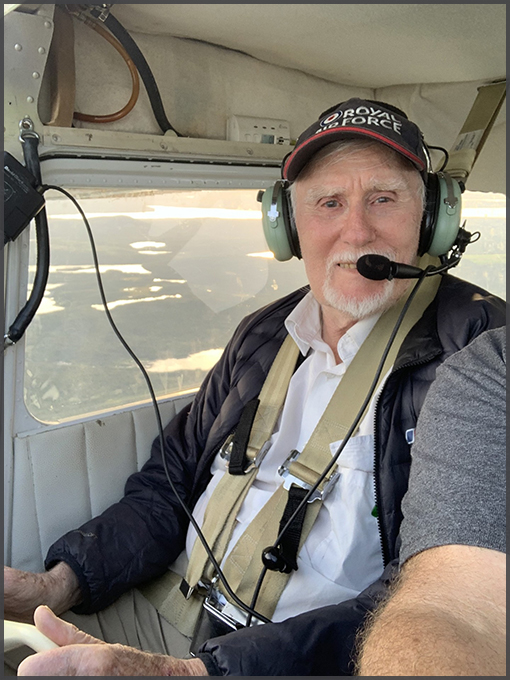
Neville Webb wrote me in Dec.2019: "This year saw me attending local COPA meetings, a flight [co-pilot!] to Harbour Grace airstrip (famous for Trans-Atlantic flights in the 1930's).
|
Neville wrote in Sep.2020: "Photo of Self: That was taken late on the same day after the B-24 site visit at the
|
Neville wrote in Sep.2020: "Three of us were guided to a crash site, of USAF Eagle Radar B-24 @GANDER (12Sep20), which covers a 330-metre diameter area; an opportunity to walk around the site, study aircraft items and take photos.
|
| Neville wrote me 02May21: "Had enjoyable flying experience week ago. A flight to check the grass airstrip at Harbour Grace [not landed], followed by a landing on Bell Island. The photo of Twin Otter C-GIED of Air Borealis was taken 25Apr21 at YYT, the industrial side of the airport."
|
Neville sent in these in June 2021: "I attached two interesting planes, both photos taken at Shoreham;
|
Neville wrote: 'Returning from a local early evening flight on 09Sep21, Antonov AN-12BP UR-CGW (UKRAINE AIR ALLIANCE / Meridian Avio Argo) followed in behind us and taxied to a far corner of St. John's Int'l Airport.'
|
The Queen's Flight DH Heron, XM295 (ca.1959) ![]() Neville wrote: 'Here is a photo of the arrival of a Royal Air Force deHavilland 114 Heron C.4 XM295 of the Queen's Flight. It brought the Queen Mother Elizabeth to the Royal Radar Establishment airfield at Pershore, as I recall, in early 1959. Most of the flight line crew were on hand to see the Queen Mother, many of the hanger workers too. The Queen Mother turned and gave all of us a lovely smile. Bought a photo of each of these moments, likely taken by the Station photographer. Photo courtesy of Unnamed Photographer.' |
Neville wrote: "Last Friday May 20th (2022) flew across to Harbour Grace.
Perhaps also of interest: Women in Aviation: Ninety-Nines: www.ninety-nines.org/our-history |
Neville sent me these photos (29Aug22), taken by his son Robert, while he retured this week from a
|
Neville wrote me another contribution, 2 in fact, in October 2022:
Antonov An-12BP (ex /B), UR-CNN (c/n 7345004) of Cavok Airlines
|
|
Update by Neville Sep.2023 Twin Otter DHC-6 Srs 300, C-FCPV (c/n 371) of Air Borealis (17Aug23). Could be (re)reg'd 14Jan20. Photo taken at industrial side of St. John's airport (CYYT). A good website to browse for Twin Otters of all ages is https://twinotterarchive.com/ ![]() Source ¬TwinOtterArchive.com/DHC-6_371 Index for the archive: TwinOtterArchive.com/DHC-6_Index_new.html |
Neville sent me the following 23Dec23: ![]() "Photos taken some forty-seven years apart of the same Hudson aircraft! Indeed, time does fly by. Little did I know those years later I'd get inside that aircraft!"
|
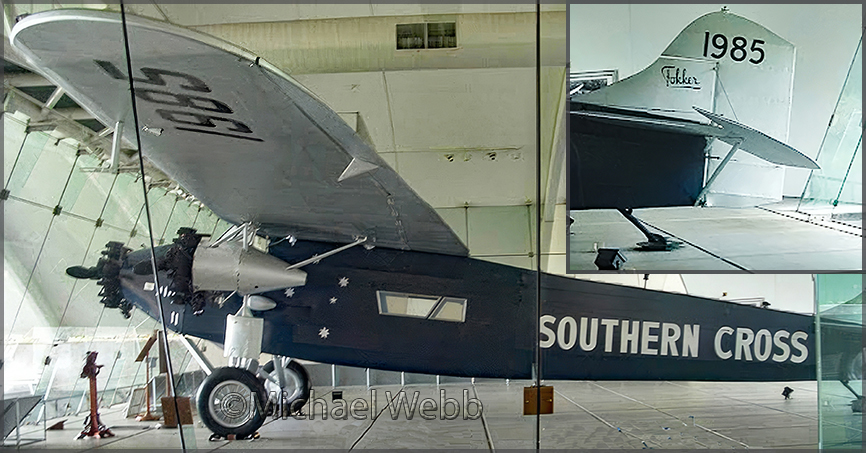
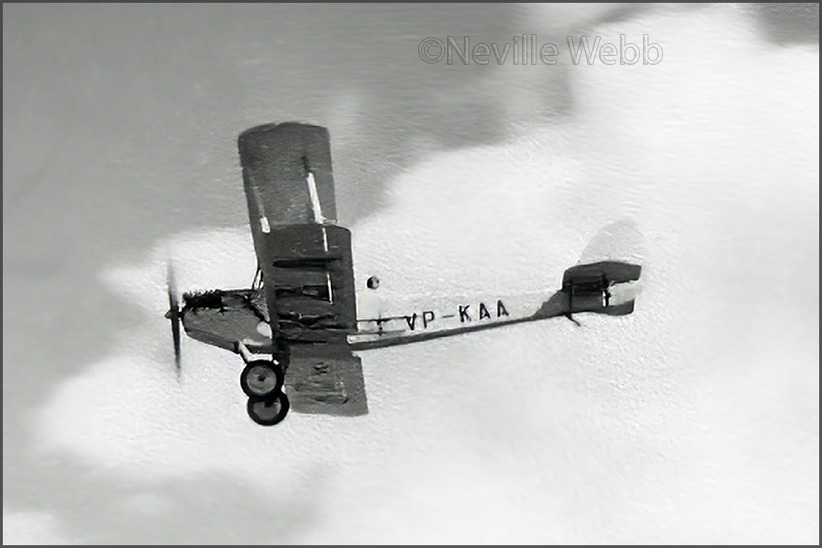
Neville wrote me in Jan.2024: "please consider adding these photos of the Southern Cross to my 'History Page'.
'First Trans Pacific Flight in 1938, by stages from Oakland, California to Brisbane. Australia.
|
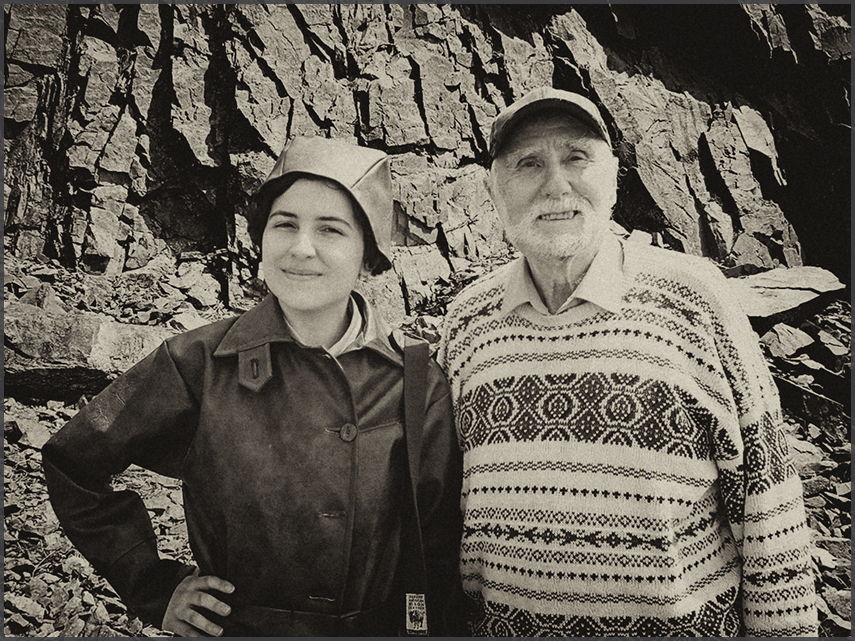
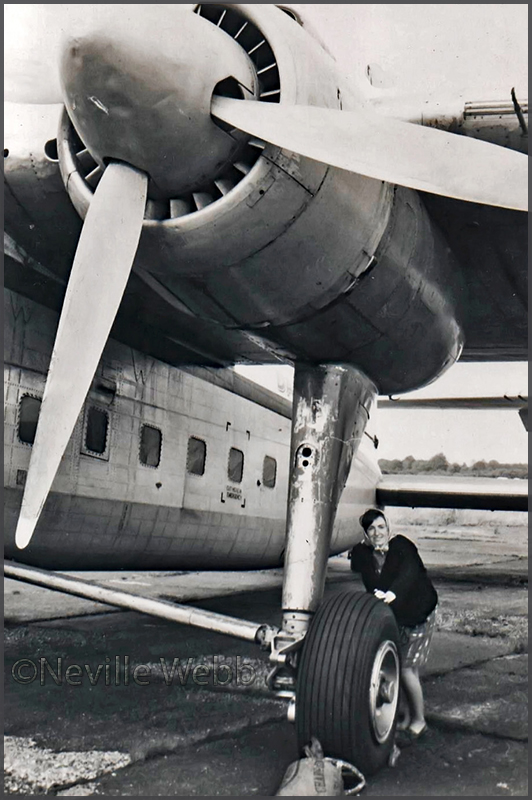
Neville sent me these in July 2024, 'Duxford Memories' Neville contnues: "The York was parked close by the [b] Bristol Freighter. On a weekend one could freely walk and drive around the airfield - see attached. Always intended to return to Lasham but never did. Mitsubishi Zero A6M3: If remember correctly this center section was exhibited in the London Imperial War Museum, circa 1962 [?]. Put my head inside rear fuselage! Spent time examining the section and tweaking/bending the very thin aluminum skin at rear! Found interesting Crash Relics exhibited in the Norfolk and Suffolk Aviation Museum. The girl on the photo is my wife, though not seen her in 20 years - lives in Vancouver.
|
I (Neville) researched and wrote the following [below] about the B-26 wreck in Labrador...
Story of Martin Marauder B-26 Times a Wastin'. The crash of USAAF B-26 at Saglek, Labrador 10Dec1942
|
More memories of wreck visits and fellow enthusiasts in this aspect of aviation history. "Steve often asked if there was a bus tour going to the RB-36 location, unfortunately no. In earlier years I (=Neville) often talked with Steve Trent, one of the two RCAF Para-Rescuers who parachuted to the RB-36 crash site. In our conversations Steve would tell jokes and also about his time in the RCAF in the UK,
|
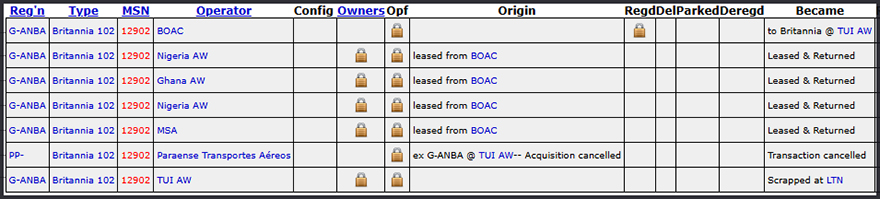
Neville sent me this (Aug.2024) and wrote: "Years ago saw Brabazon aircraft twice when flying slowly west at fairly low altitude over Pontypool... That summer I must have been ten years old at the time The first production Britannia, delivered new to BOAC on 22 August 1957. Bought by Britannia Airways in March 1965 and operated until retired in November 1969. Broken up at Luton in June 1970.
Neville found this link of Memories/ Stories of Bristol Aircraft Co. BAC 100: 2010 |
My son Robert Webb, who is visiting Berlin to participate in Marathon Race, emailed me a series of photos of various aircraft he took while at Tempelhof Flughafen. He was most fortunate to view and photograph the rebuilt and restored Focke Wulf Condor FW 200.![]() Focke-Wulf Fw 200 Condor, photo by Robert Webb (09-2024) From Wikipedia: Focke-Wulf Fw 200 Condor. Only one complete reconstructed Fw 200 exists today, an aircraft that ditched in February 1942 and sank to a depth of 60 m (197 ft). This aircraft was raised from Trondheim Fjord in Norway on 26 May 1999. Although the airframe disintegrated while being lowered onto a recovery platform, the remains were transported to Airbus Bremen and spent 22 years being rebuilt. A request from the Berlin museum for a set of separate wings to be recovered from the Kvitanosi mountain near Voss in Norway to complete the rebuilding was at first denied, because the local population wanted the wings to be left in situ as a war memorial. A compromise was reached in 2008, where parts not needed for the restoration would be left on the mountain. In 2009, parts were moved down by helicopter and made ready for transport to Bremen. Other wrecks were also found, but in extremely poor conditions, one at 68 m deep. The aircraft was finished in June 2021, then dismantled and transported to the former Berlin Tempelhof Airport for final assembly as an exhibit in Hangar 7. |
Neville sent me on 06Nov2024: "Zero Fighter Aircraft @Hawaii Wednesday from son Steve who is presently on holiday in Honolulu, Hawaii."
|
In May 2025 Neville sent me another update for his personal AVIATION HISTORY page.
|
Neville wrote (July 2025): "Hi Ruud! Have been intending for a while to send you the story of RCAF Liberator 586. (Further up the page there are previous posts by Neville). Story of RCAF Liberator 856:
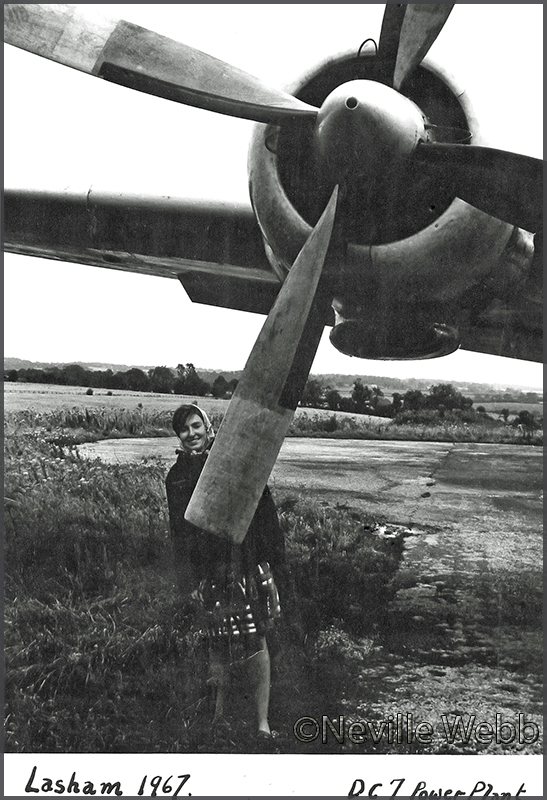
On the RCAF Liberator 856 Pratt and Whitney R-1820 Power Plant.
|
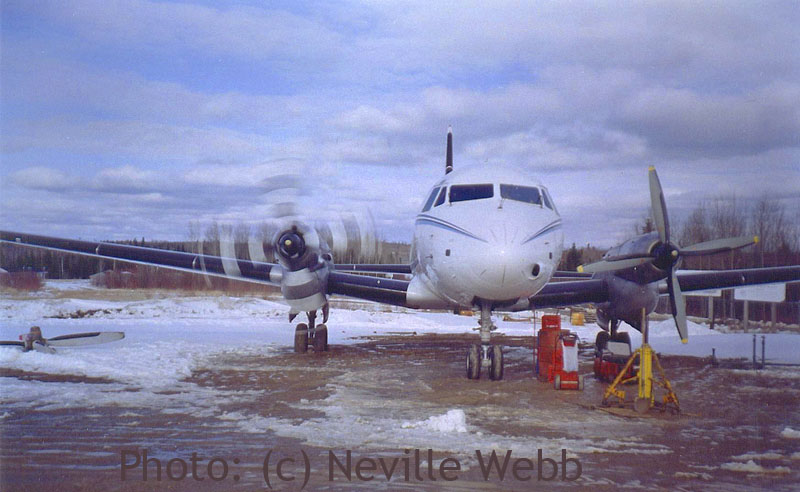
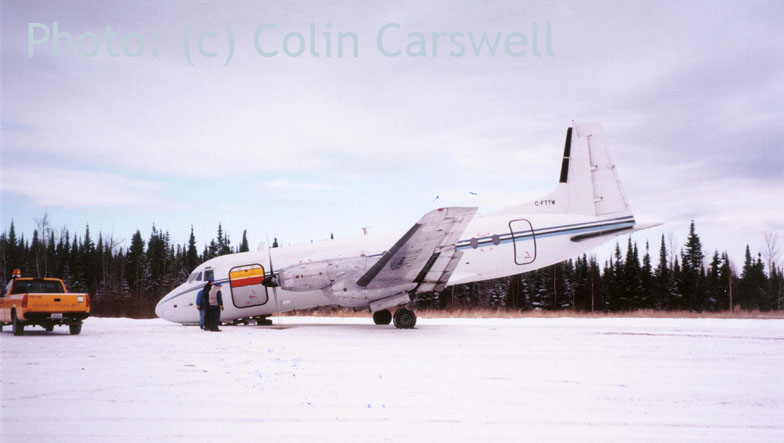
Neville sent me this in Sept. 2025: DH Buffalo at Sandy Lake! "Luckily found the photos of the DH Caribou at Sandy Lake Ontario saved on a USB. Can't remember the date but likely in the 1980s, possibly while I was waiting to leave the First Nation community for summer holiday. After landing the DH Caribou parked using reverse propellers some distance away from the small passenger terminal building."
|
From 1995 to 2005 I taught in the isolated First Nation Community of Sandy Lake, NW Ontario.
Sandy Lake airport is typical of the airports found in the many isolated communities across NW Ontario such as
-=+=- |
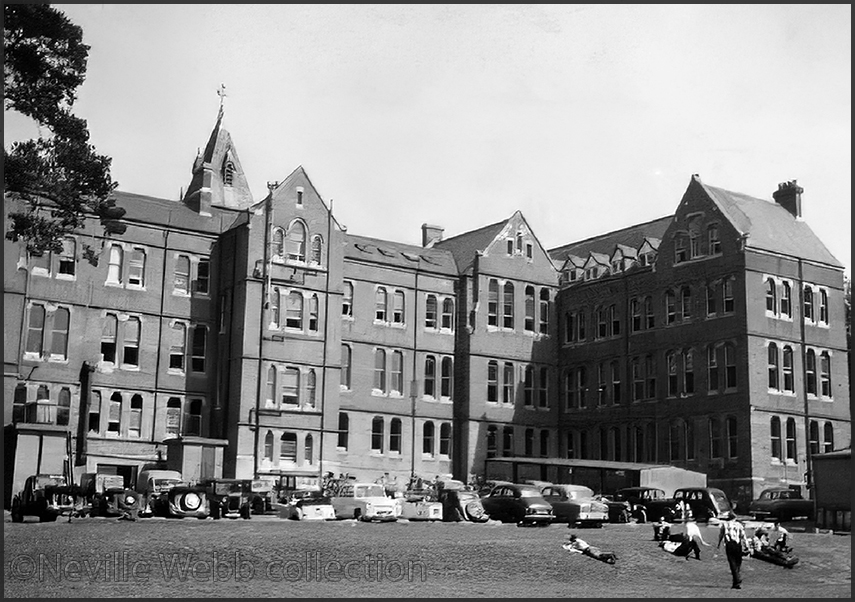
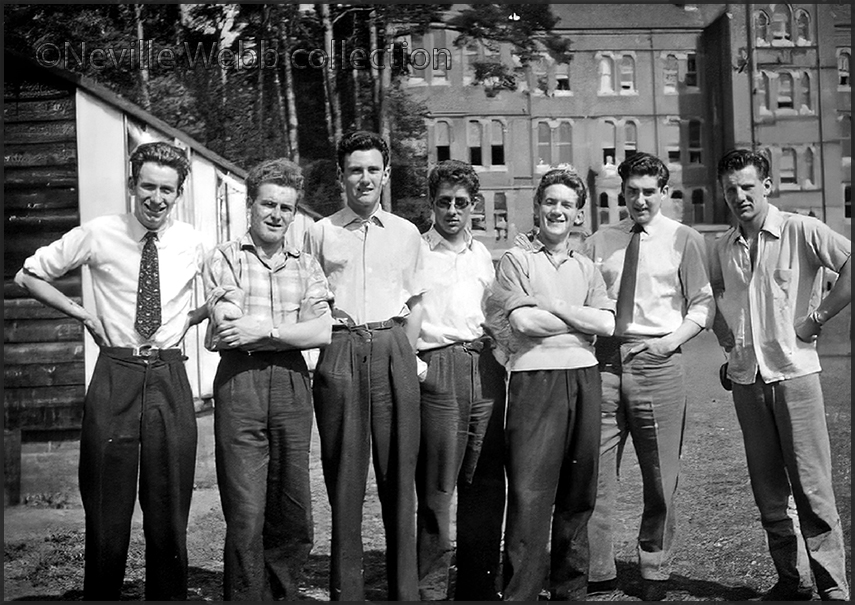
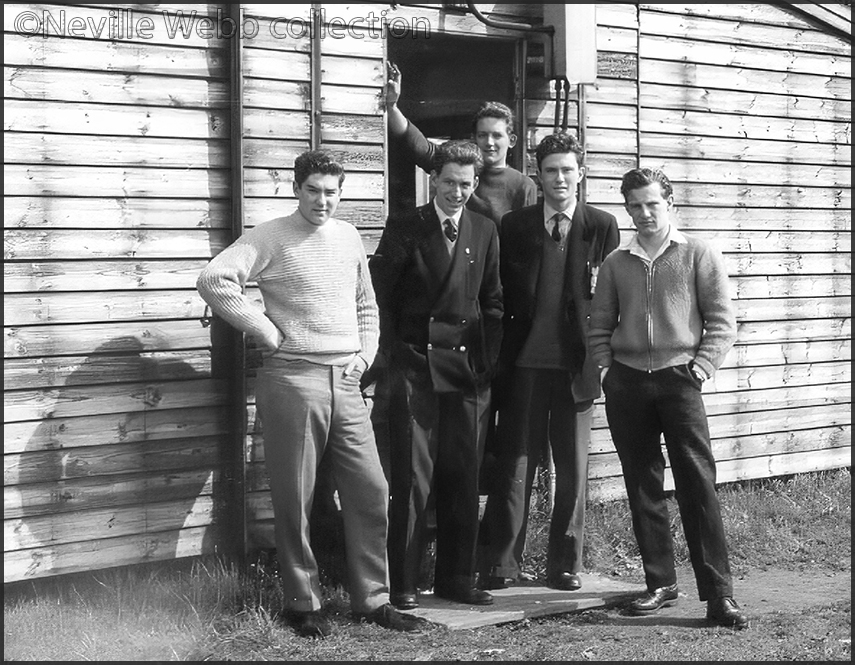
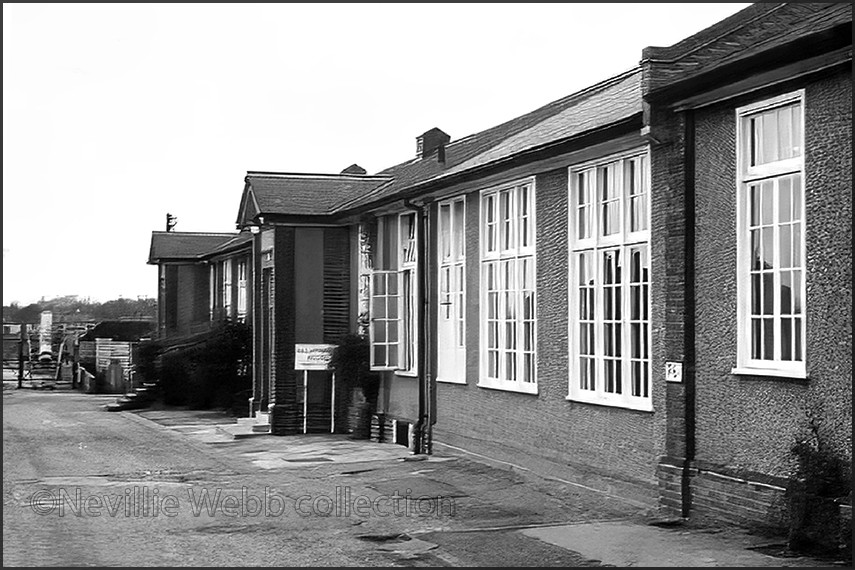
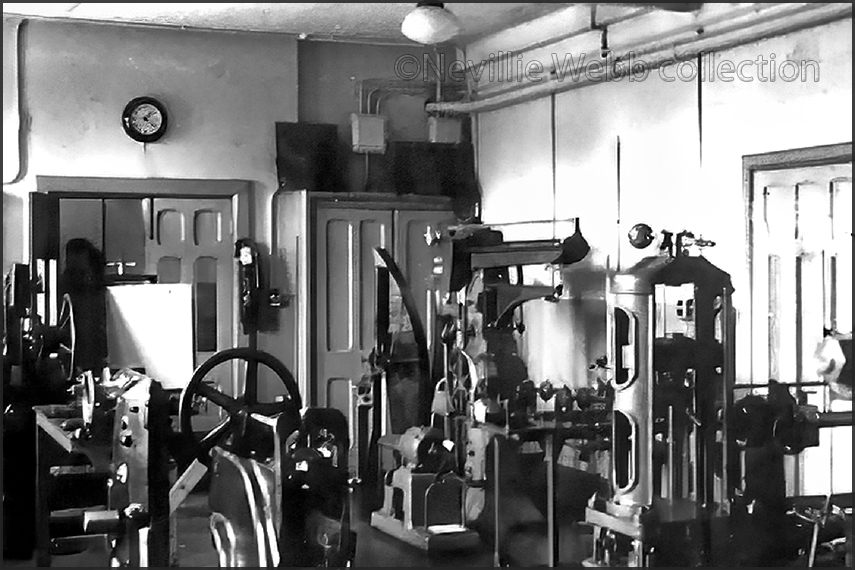
Royal Aircraft Establishment Technical School, Farnborough 1958-1959.
As mentioned, my time at the RAE was mostly a happy one with lots of memories.
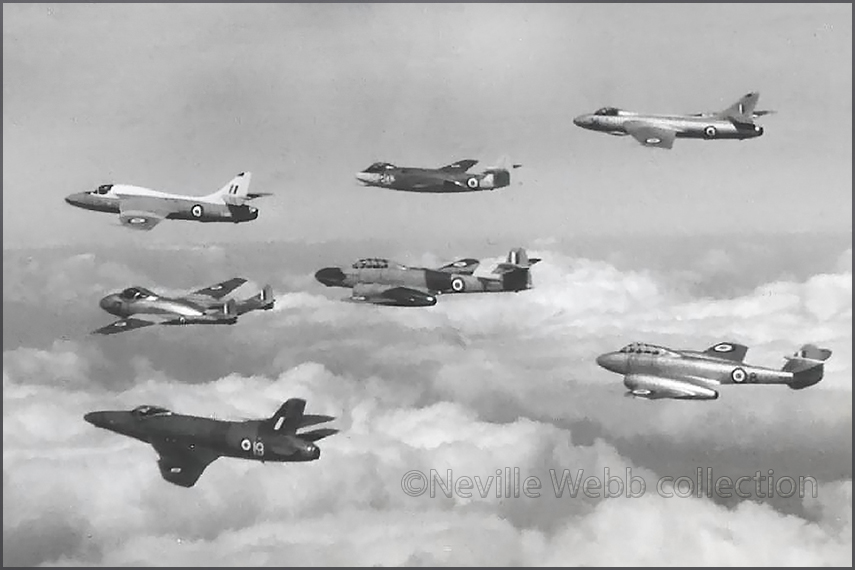
ETPS aircraft formation: In lead a two seat Hawker Hunter followed by Gloster NF.11 and two seat Gloster Meteor trainer. At right: Supermarine Sea Hawk and a single seat Hawker Hunter. An update to this subject was added on 25Nov25.
|
[Update 08Dec2025] Neville: "It's that time of year again, snowstorm, rain and this past week, very cold with a chill, howling wind gusting to one hundred kph at times. This weather a little early for this time of year!
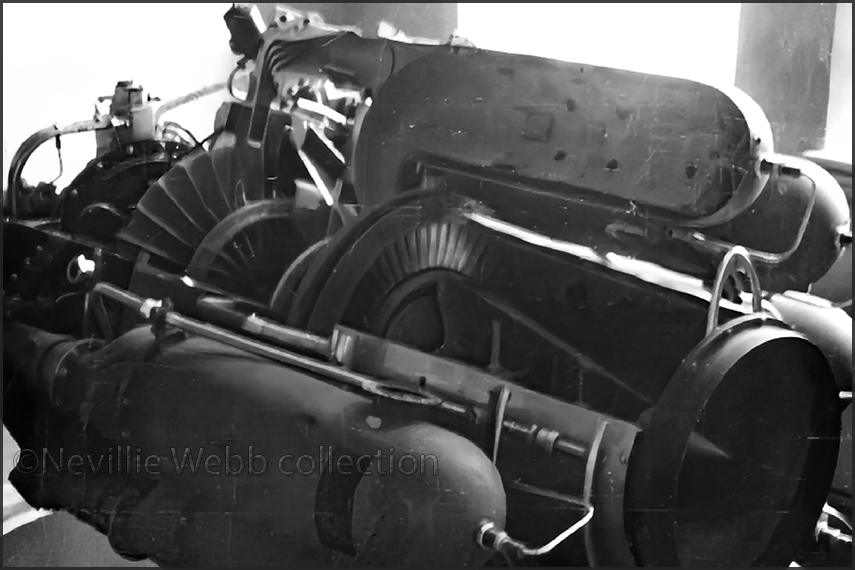
Neville: "From what I remember there were items of aviation interest stored around the RAE. Recall a German axial flow jet engine in a far corner of D Shed, also an Aeronca Champ (?) stored in shed. Seem to recall an Armstrong Whitworth Apollo parked at ETPS during a visit to air show in 1958."
"Lettice Curtiss, the famous engineer and wartime ATA ferry pilot, sometimes showed up during the weekend. www.magnificentwomen.co.uk/engineer-of-the-week/63-lettice-curtis and |
Lastest update: 24-Jan-2026
|
|