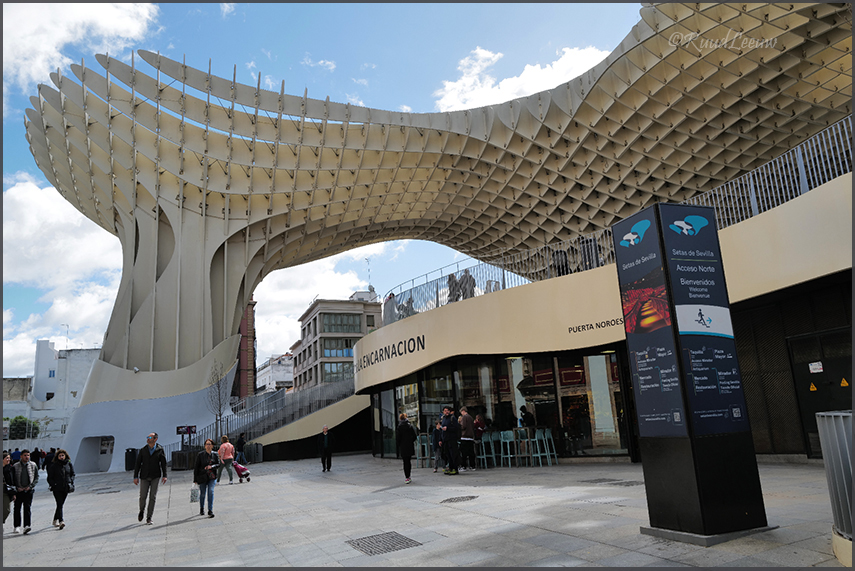
This was the Sunday afternoon, after our
Carmona visit.

We made our way to the cathedral, things looked promising.
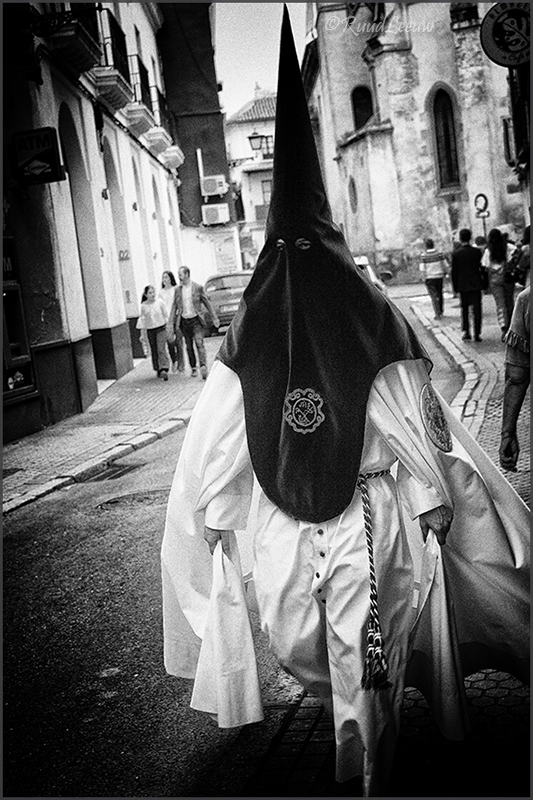

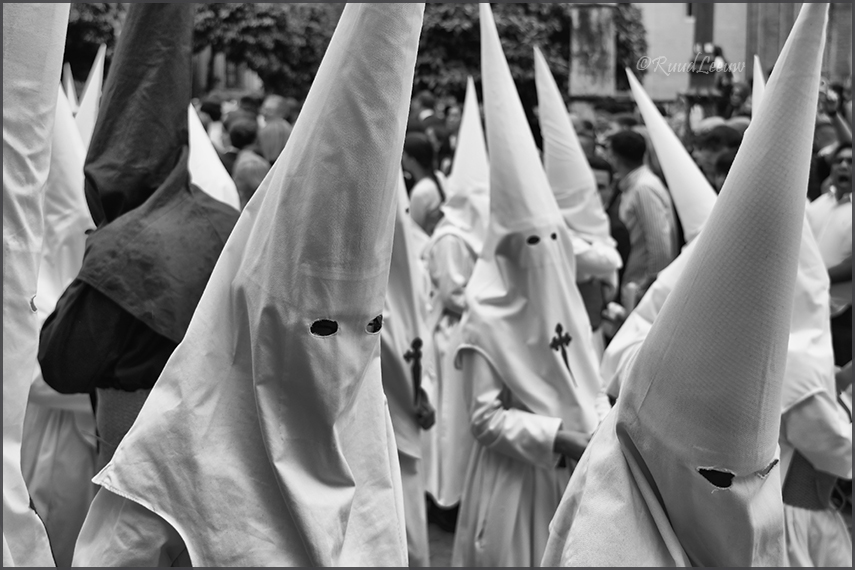
More dressed in black here, but I don't know the significance.. EMAIL
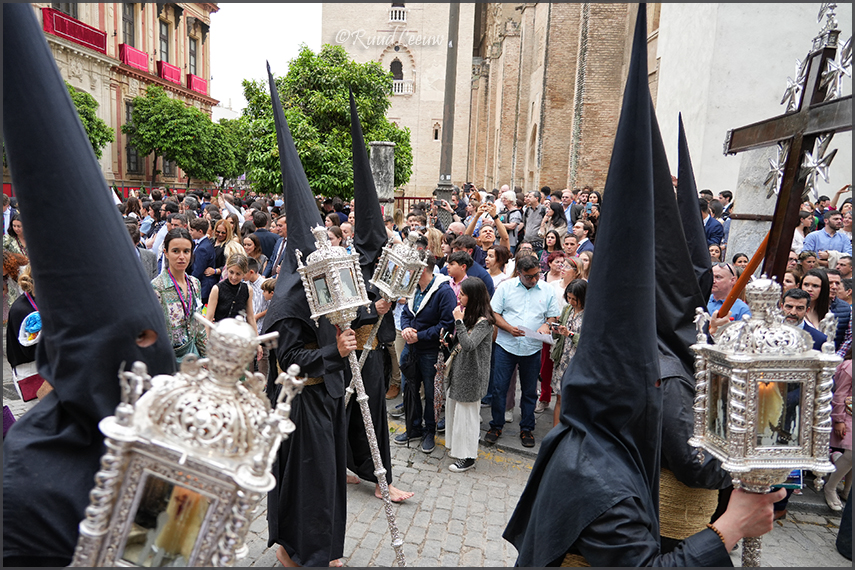
I did not fully grasp the 'operations' of the processions during the Holy Week. I did get some brochures from our
hotel in Dos Hermanas, but they weren't basic enough for my level of understanding. I did grasp that processions
would start at the cathedral, so that's were we walked to. But it's also the most crowded location 

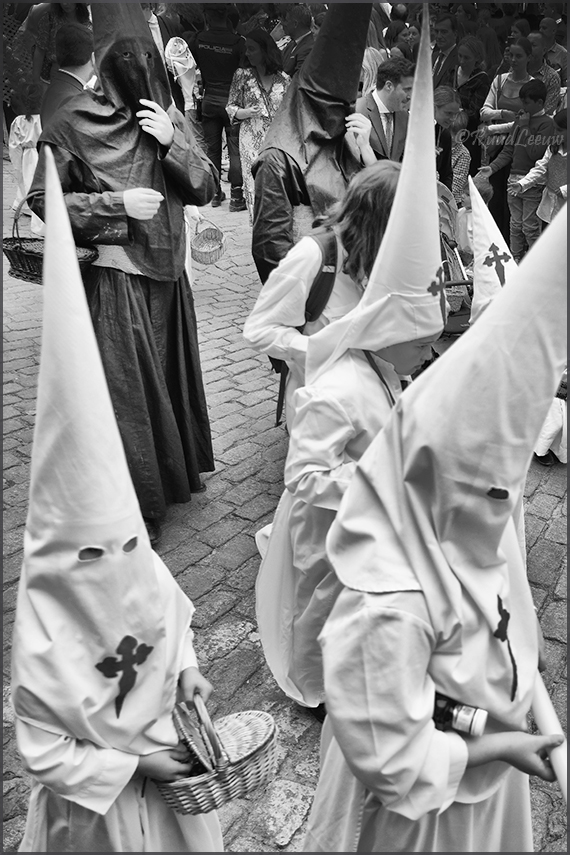
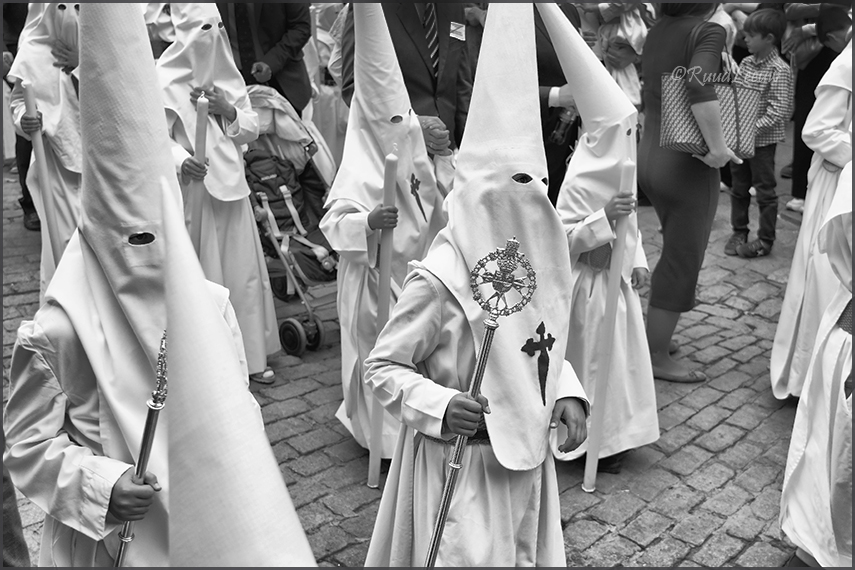
Many
children walk in the procesison too, sometimes they hand out sweets
to other children.
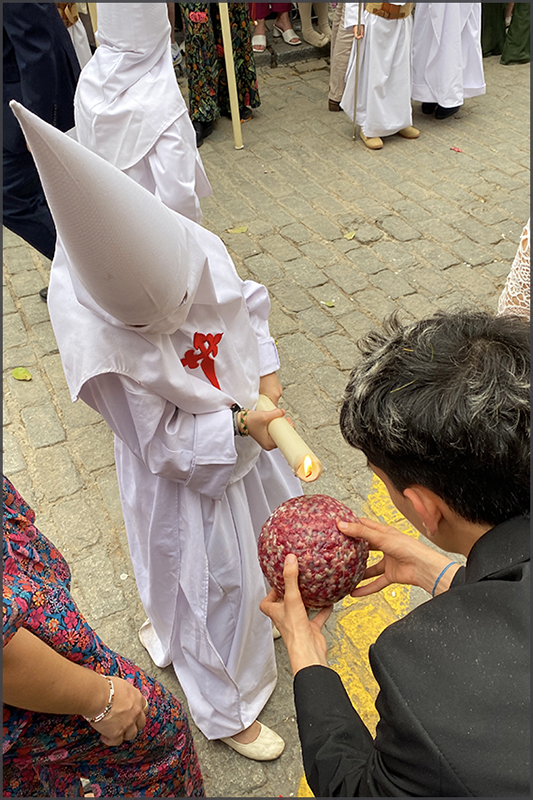
These huge balls of candle wax are gathered from the street
from
candles
droppings or rests of candles, allegedly...

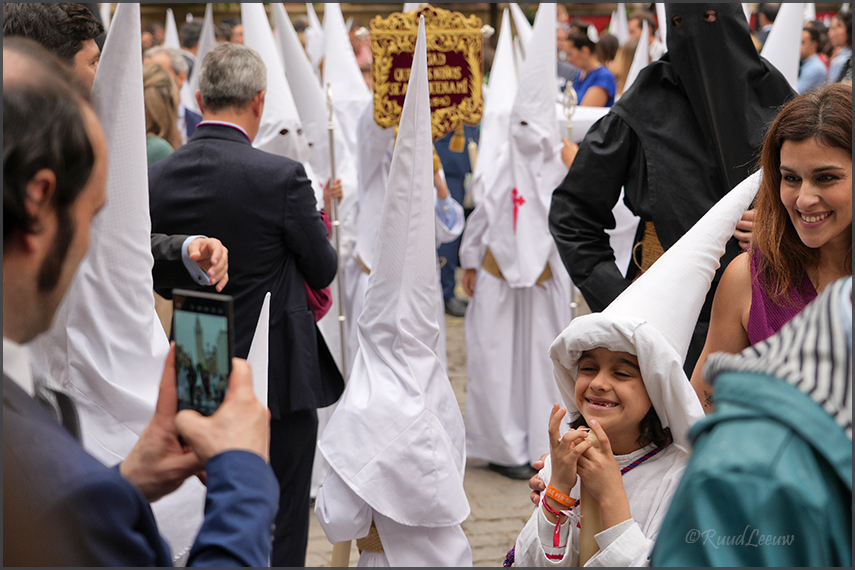
Who could resists!
Since we arrived a bit late, after lunchtime, I did not have time to properly reconnoitre a good spot along the route
so I
searched for a spot to park our car near the 'Catedral de Sevilla' and joined the masses.
Uncomfortably crowded!  People behind me pushed me to the street, police pushed me back..

I switched between my Sony A7IV camera (+Sony 4/24-105 G OSS) and my iPhone 11, which was easier
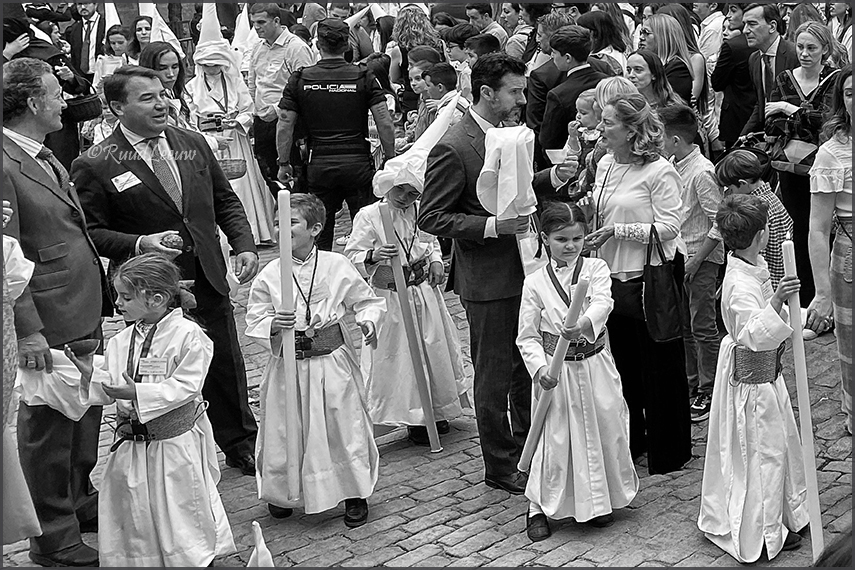
to hold over my head. There were a lot of officials, parents and other civilian walking in the procession too 
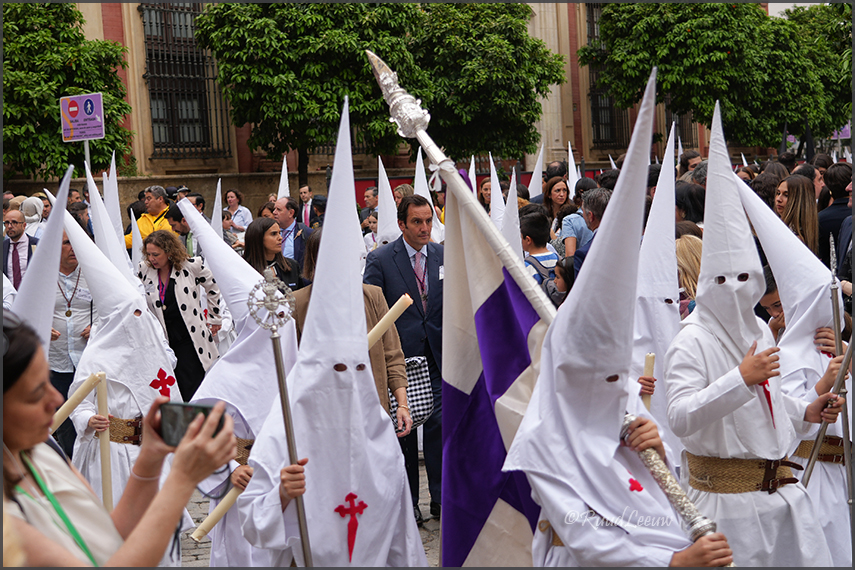
At home I had to resort often to cropping to get a proper concentration of 'hoods'.
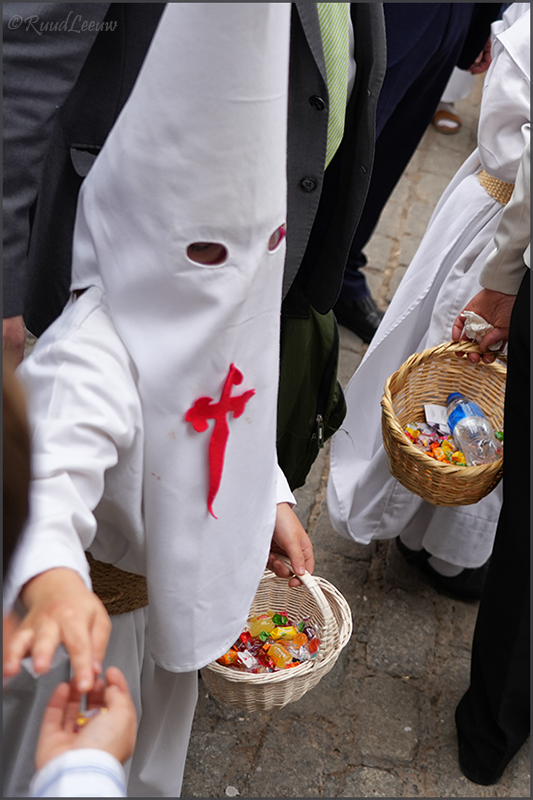
Handing out
sweets.

As stated earlier I did not have a proper understanding of the procession procedures, I gradually understood that
a/ many more cities have processions all over Spain, b/ the (bigger?) cities
have multiple processions and c/
they are discharged from 'the' cathedral/church
(multiple?) in some sort of order, d/ proceed by different
routings (or not?). Still much too learn here.

At home, researching the subject while compiling this page I did find some useful information_
'
During this week, thousands of hermandades (brotherhoods, also called cofradías) have been passing through the
towns and villages, especially in the south of Spain, for many centuries. Among the cities where the most beautiful
and impressive celebrations are held are certainly Málaga, Seville and Cartagena.'
I assume that the banner carried here signifies a brotherhood...

My Sony A7IV worked nicely to get play with the depth of field
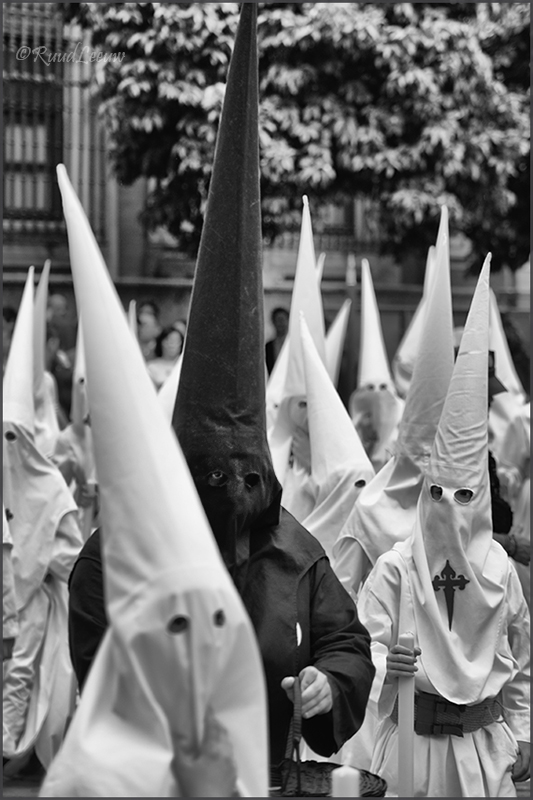
Black & white
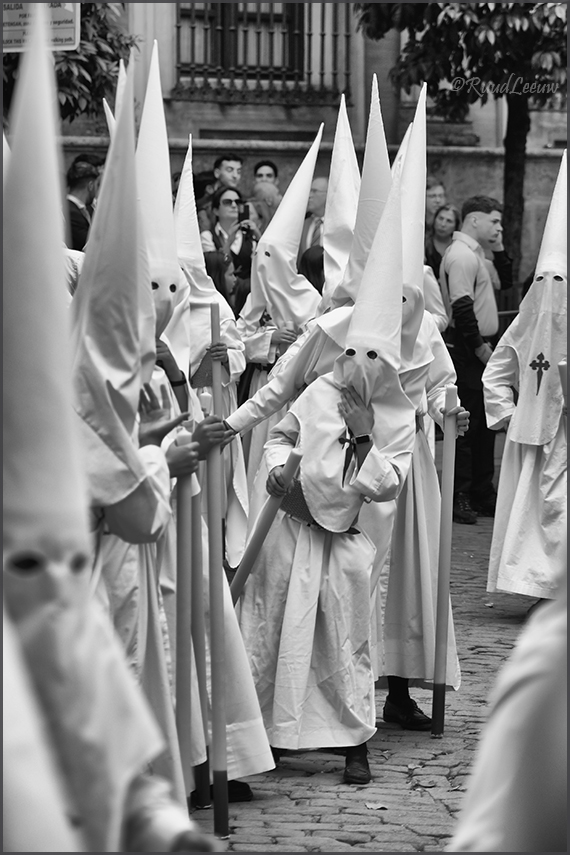

Hands outstretched for sweets..
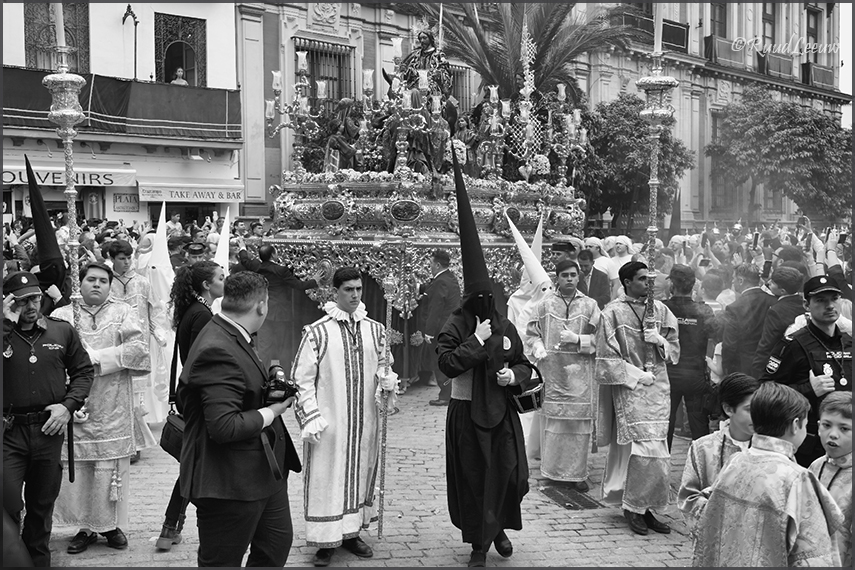
The floats (pasos) are a central part of the procession, carried around by hidden carriers, they must weigh tons...
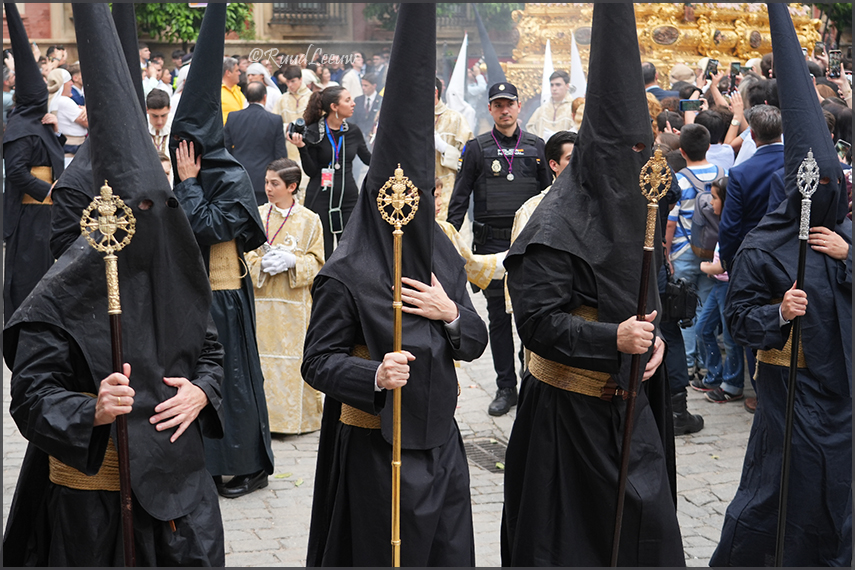
The robes probably signify some sort of hierarchy among the hermandades (brotherhoods, or cofradías)
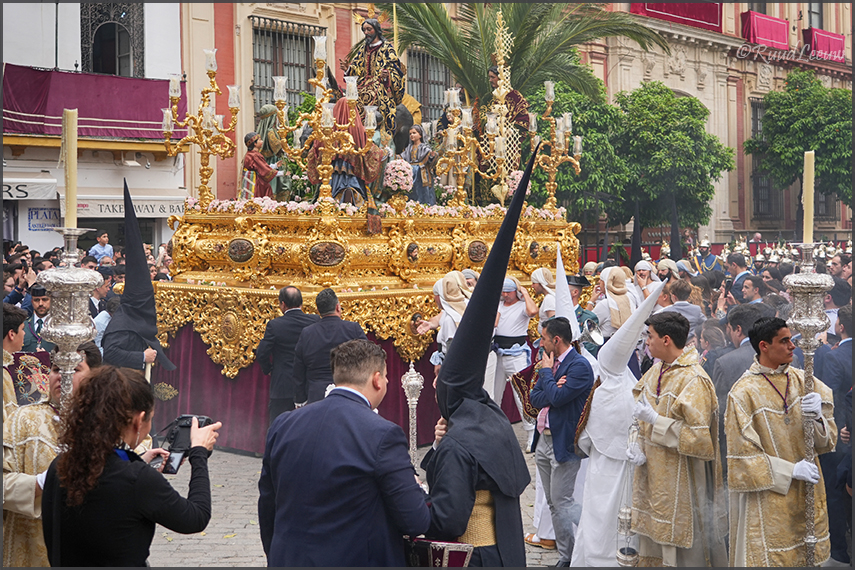
The porters (portadores) prepare to relieve the others.
A Paso (Spanish: 'Episode of the Passion of Christ') is an elaborate float made for religious processions.
They are carried by porters on staves, like a litter or sedan chair, and are usually followed or escorted by a band. Some have long skirts that cover the bearers entirely, giving the impression that the statue is floating on its own power.
The porters are called costaleros, cargadores or portadores and their leader is called a capataz ('Foreman' or Head Man').
The capataz sets the chicot , the period of time between a paso being lifted and set down again; the costaleros cannot pick up or set down the paso except by his leave. This is signalled by the llamador ('crier'), a knocker on the front of the float. During Semana Santa (Wikipedia: Holy Week, the week preceding Easter Sunday) the custom is to make pasos adorned with large wooden statues of Jesus Christ, the Virgin Mary, saints and biblical personalities from the Passion. |

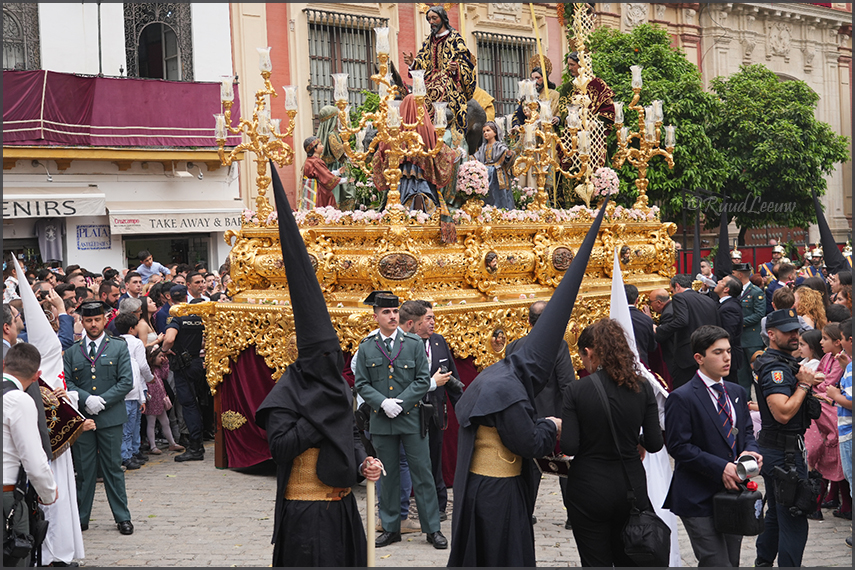
The porters are called costaleros, cargadores or portadores and their leader is called a capataz ('Foreman' or Head Man').
The capataz sets the chicot , the period of time between a paso being lifted and set down again.

Discreetly the porters are relieved before making the turn and proceeding a
next sector.

The weight of the float required sufficient distance between the crowds lining the street and the paso.

The float is moving again, one sees how in the turn the float gets too close to the crowd.

The tight outside turn brought the float (too) close to my
camera..
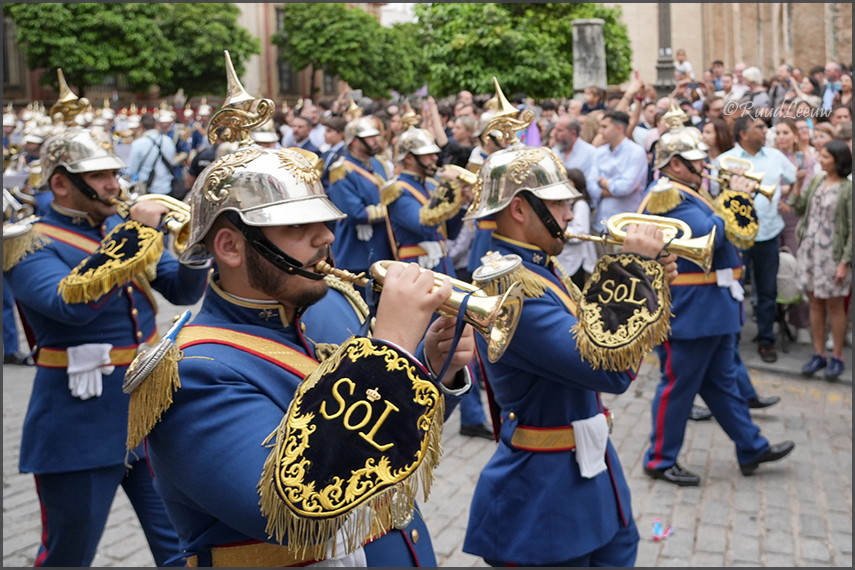
The fanfare follows directly behind the paso
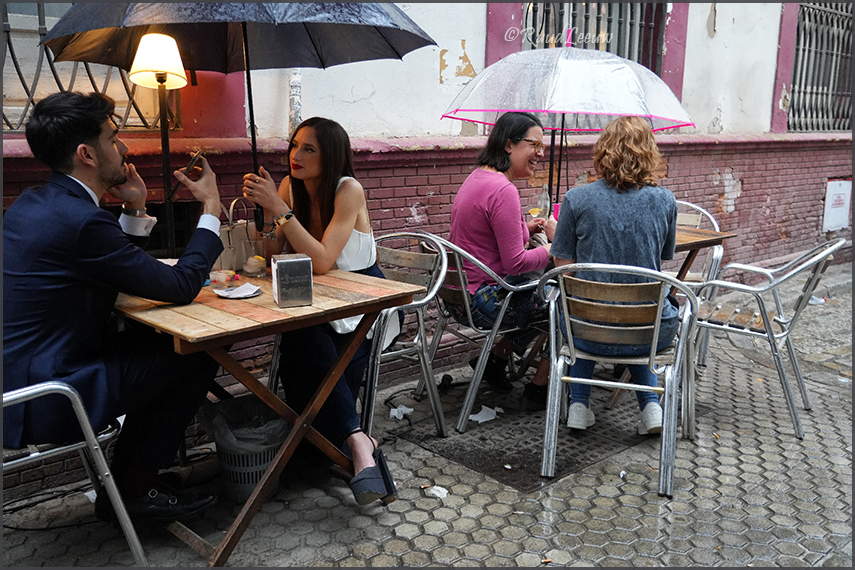
With the procession at its end and tired of the pushing and shoving, we retreated. A slight drizzle was falling..
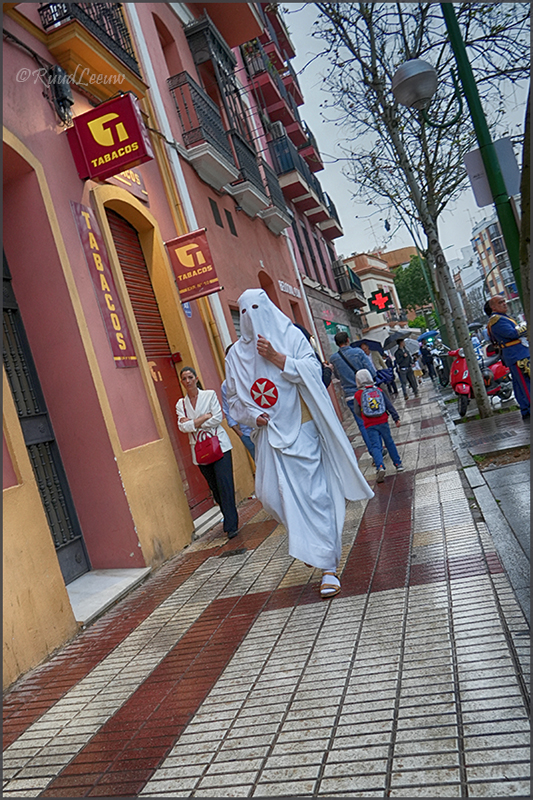
Where did the cone go? At least it provides a protection against the rain.

Rarely do people go barefoot these day (afaik), this is the true tradition of atonement!
 Photos © Ruud Leeuw